Not Just on the Roof: Photovoltaics around Industrial Buildings


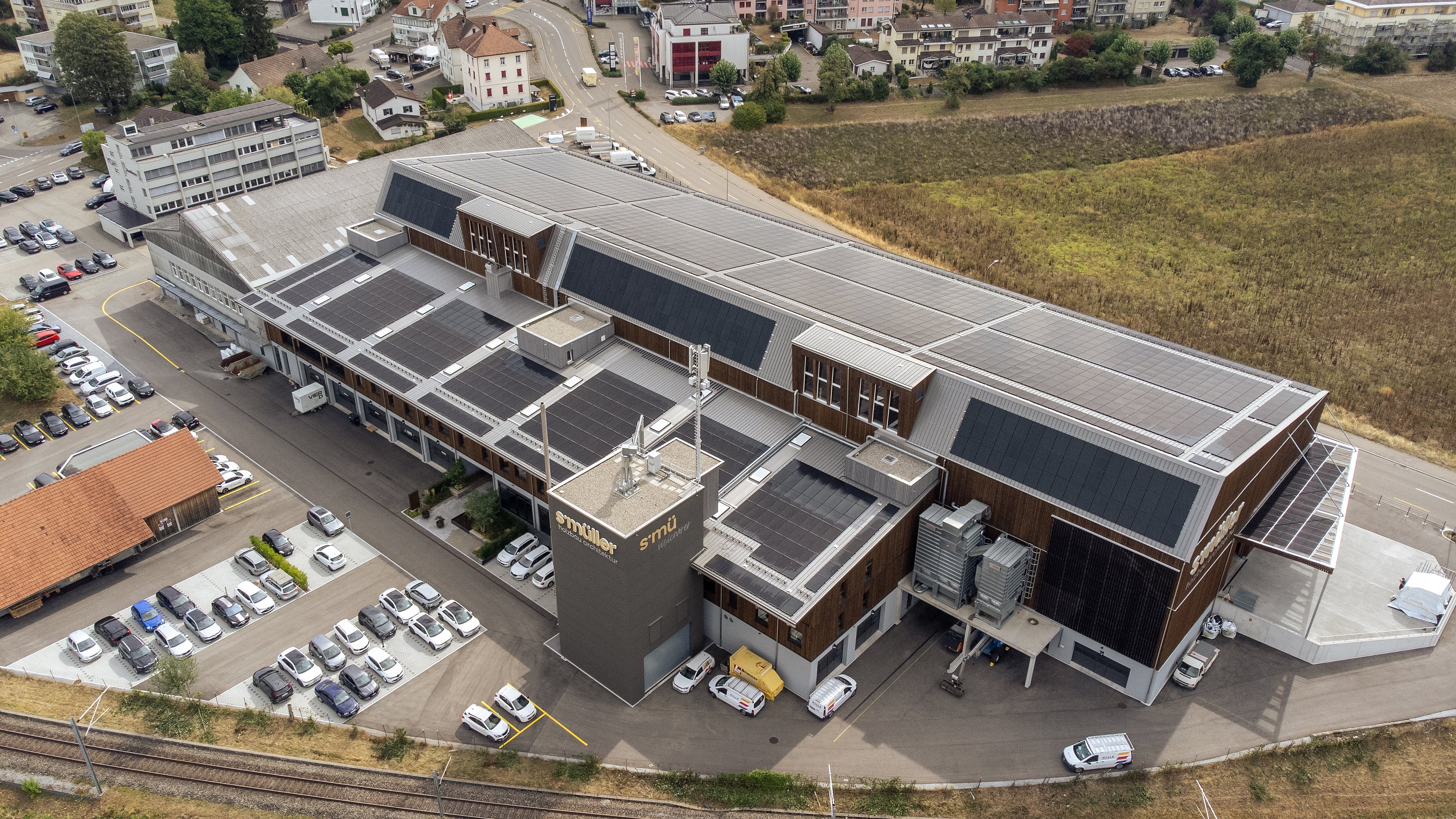
Roof, facade, canopy, windows – from east to northwest: at the new S. Müller Holzbau AG building in Wil (SG), almost every surface is being used to generate electricity. The photovoltaic system, comprising around 2,500 modules, supplies solar power for manufacturing and the offices from morning until evening. It was designed by Basler & Hofmann on behalf of Technische Betriebe Wil.
The new photovoltaic (PV) system on the new building of S. Müller Holzbau AG in the industrial park of the town of Wil is one of the largest systems in the canton of St. Gallen: Under standard conditions, it reaches a peak output of 927 kilowatts-peak, or just under one megawatt. The timber construction manufacturer uses the solar power to meet its own energy needs and feeds the surplus into the regional grid via a power purchase agreement.
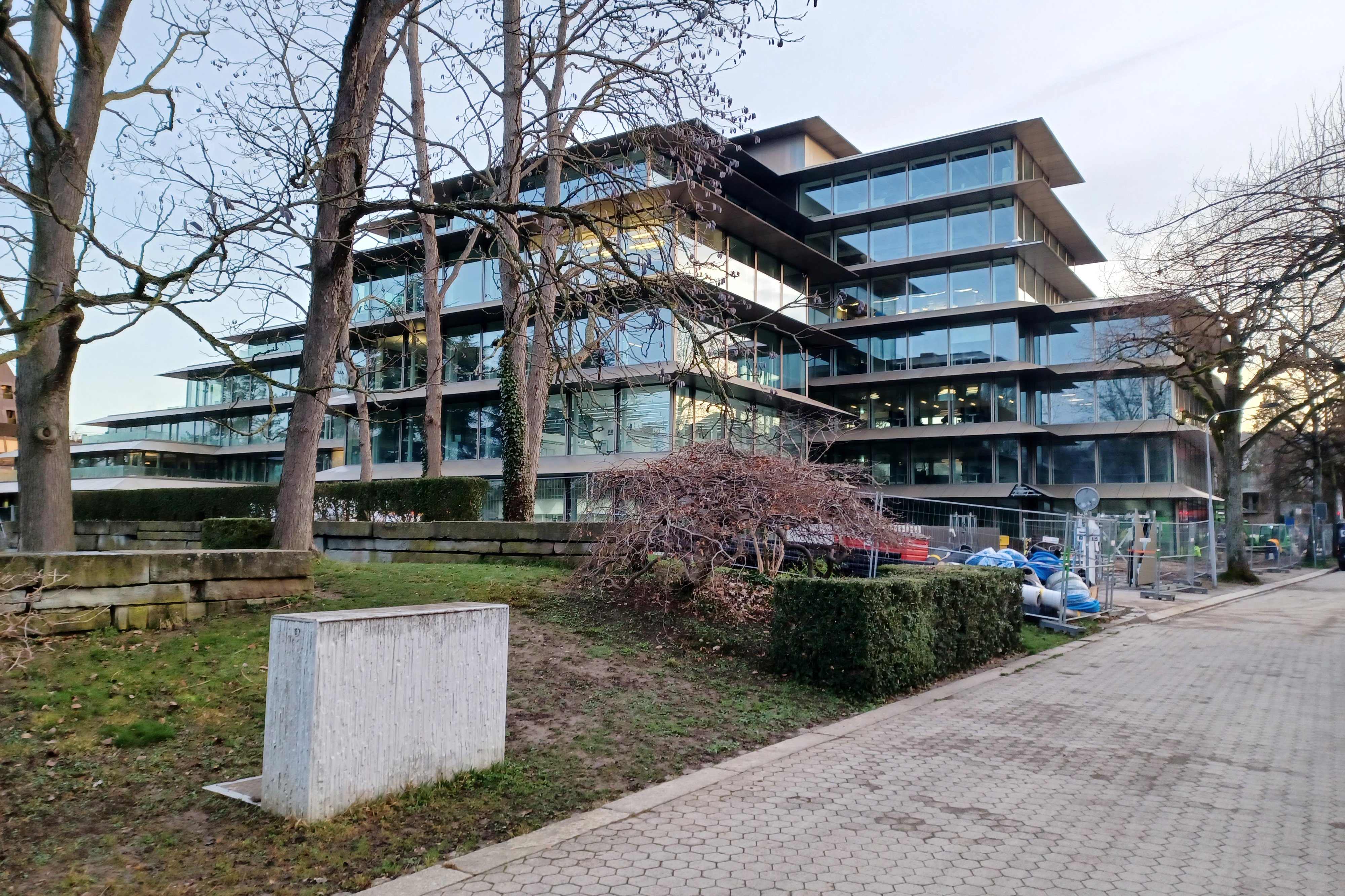
The PV system covers a large portion of the building’s surface – and does so in an aesthetically pleasing way. The approximately 2,500 PV modules are carefully integrated into the architecture. In some places, they almost look like a design element. “The visual appeal was important to us,” explains Stefan Müller, owner and CEO of the timber construction and architecture firm.
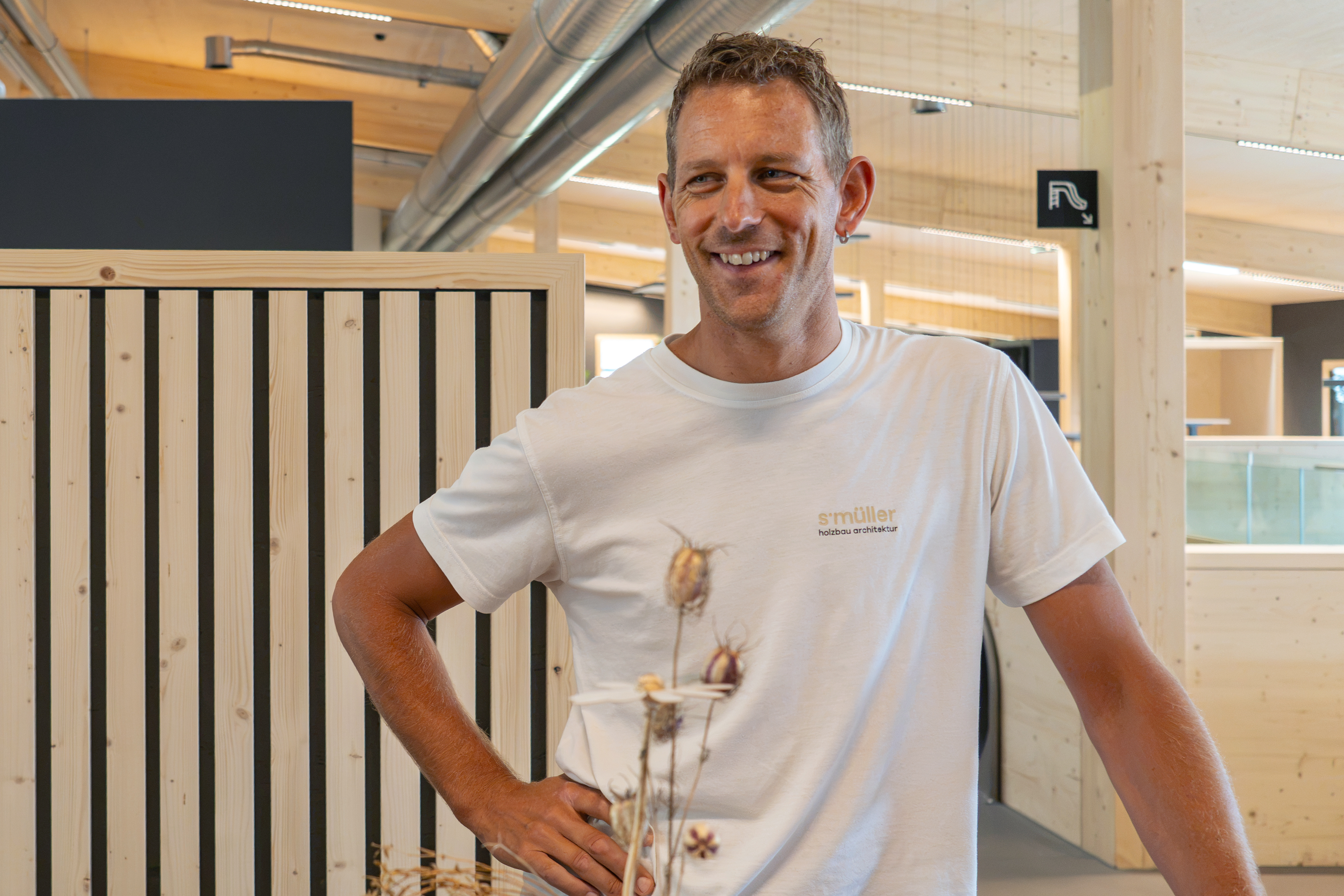
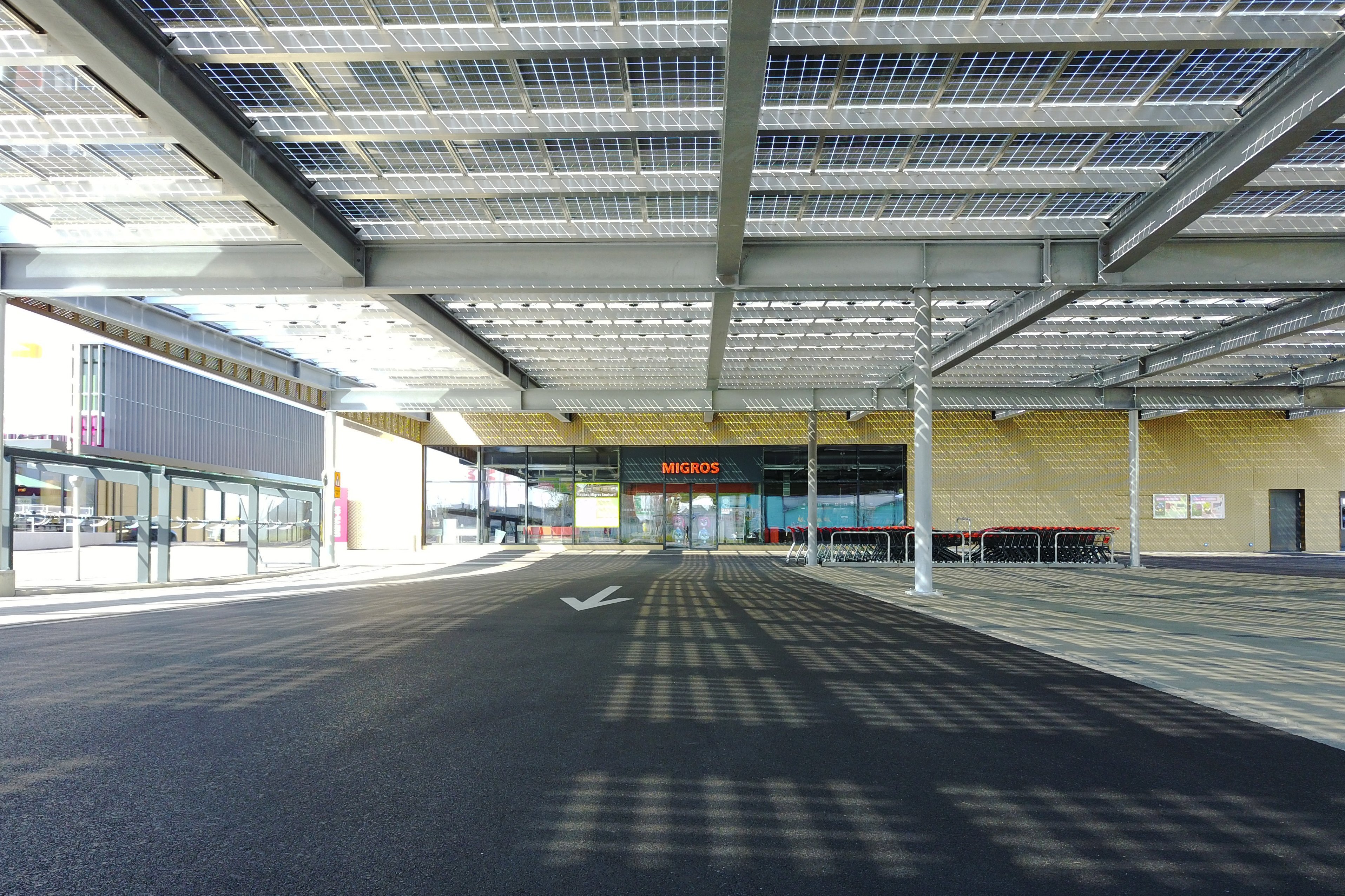
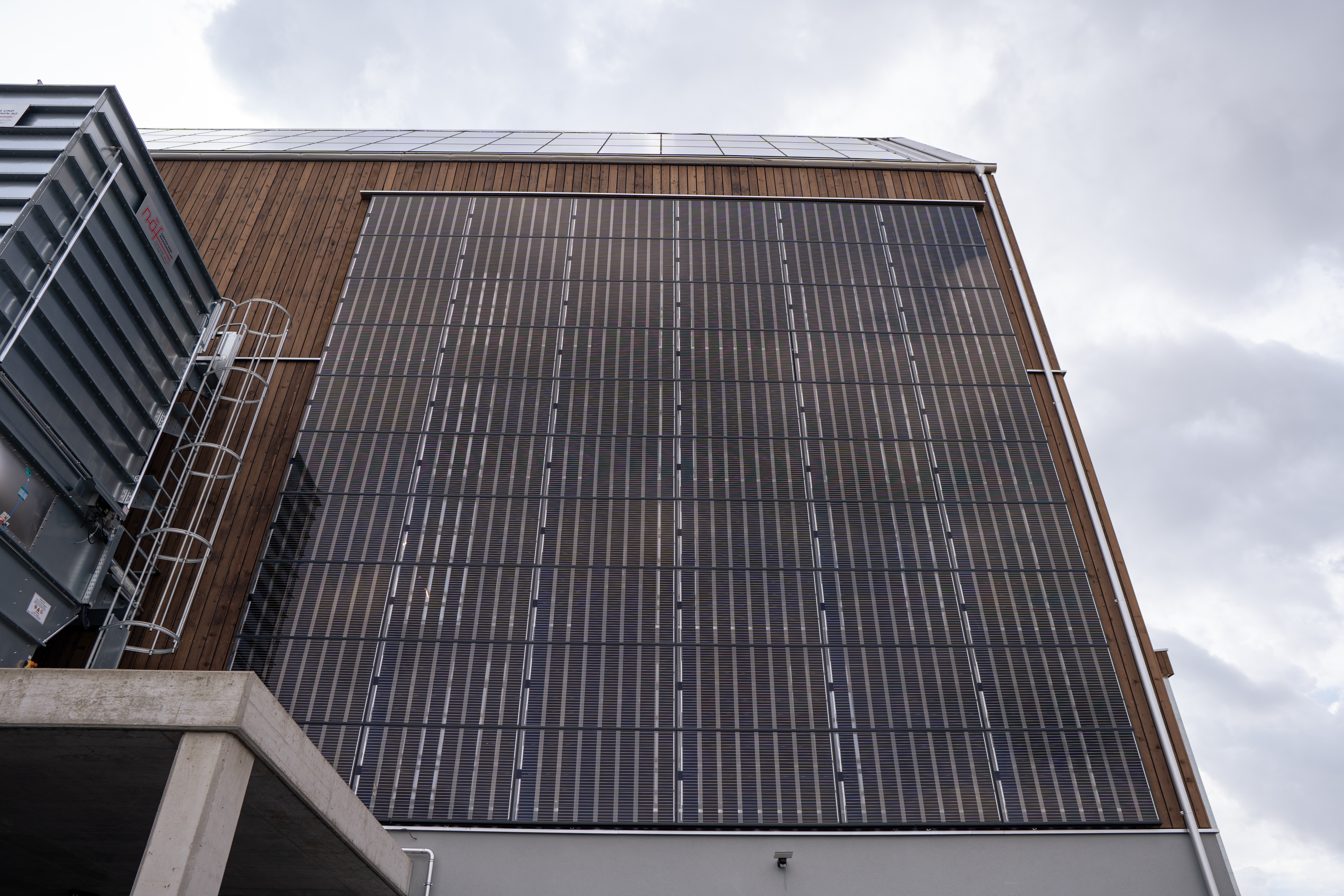
“We didn’t want an ugly industrial building. Above all, we wanted to showcase innovation and sustainability,” says Müller. “That’s why our new building, constructed using timber, was to be fitted with as many PV panels as possible.” The new building features solar panels not only on the roofs, but also on canopies, on the facades, and even on the windows.
Electricity from the Morning and Evening Sun too
In Switzerland, PV systems on buildings are often installed only on flat roofs and oriented toward the south. With such conventional systems, electricity production peaks around noon – precisely when the most electricity is fed into the grid and feed-in rates on the market are at their lowest.
If, on the other hand, the PV modules are installed on roofs and façades facing different directions, electricity generation is spread more evenly throughout the day: the east-facing side generates a lot of electricity in the morning, the south-facing side at midday, and the west-facing side in the late afternoon and evening. Even on north-west-facing façades and roofs, some electricity can be generated, for example using modules mounted at a steep angle.
East, West, South – Every Surface Counts
This makes good business sense for companies: By installing solar panels on as many surfaces as possible and facing in all directions, not only is more electricity generated overall, but electricity generation also better aligns with the power consumption of an industrial facility.
S. Müller Holzbau AG, for example, requires electricity from early morning until the evening. An all-around PV system supplies energy for longer periods and, above all, distributes it more evenly throughout the day. PV systems on facades are also particularly beneficial in winter because the low winter sun reaches vertical modules more effectively. This means that, year in, year out, a portion of the solar power can be used directly on site.
At S. Müller Holzbau AG, the solar power the company generates itself covers 62 percent of its annual electricity needs. At the same time, the proportion of self-consumption stands at 21 percent. This means that the timber construction company uses 21 percent of the total solar power it produces. “We can feed the rest –nearly 80 percent of the electricity produced – into the grid,” says Müller.
Working Behind Windows That Generate Electricity
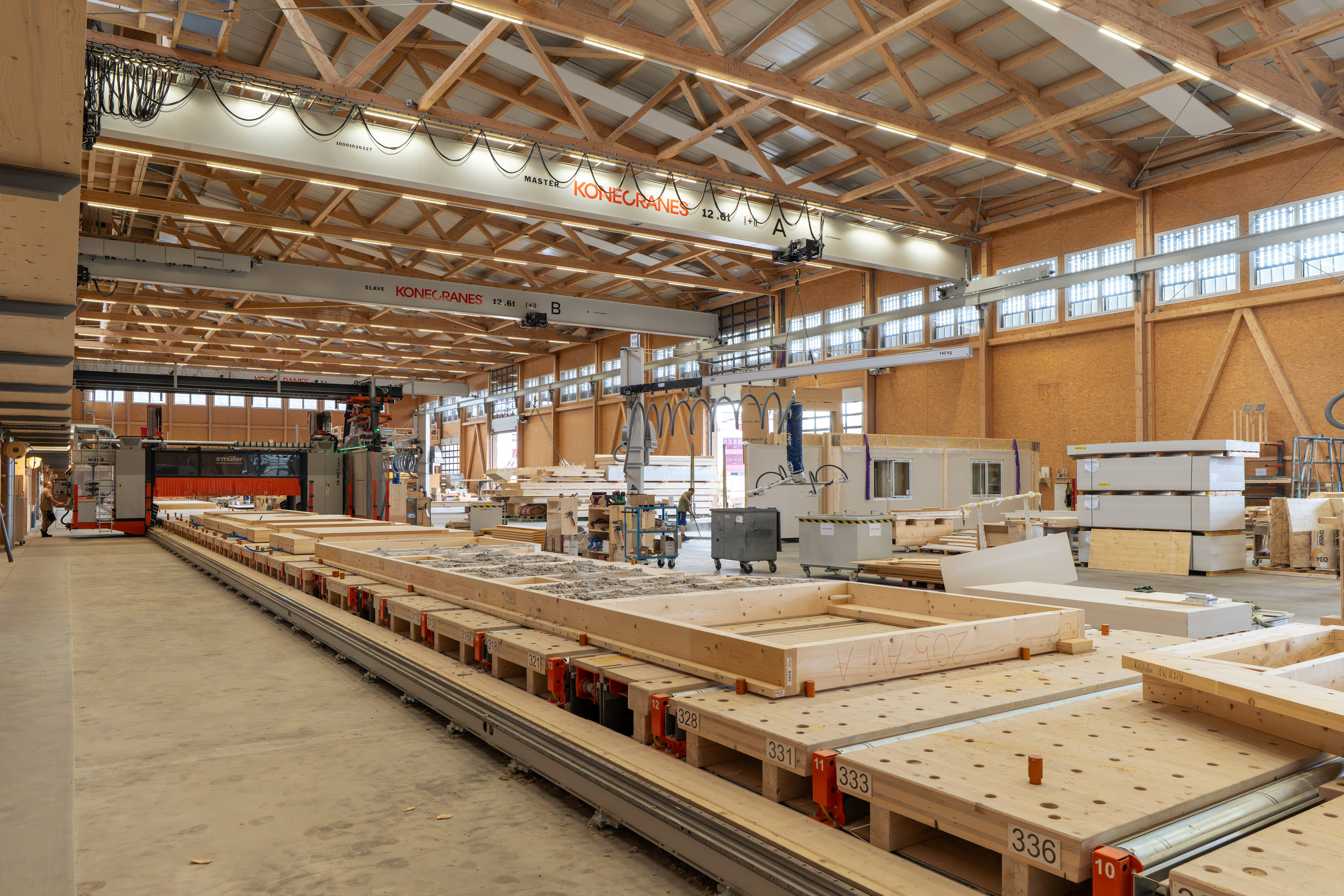
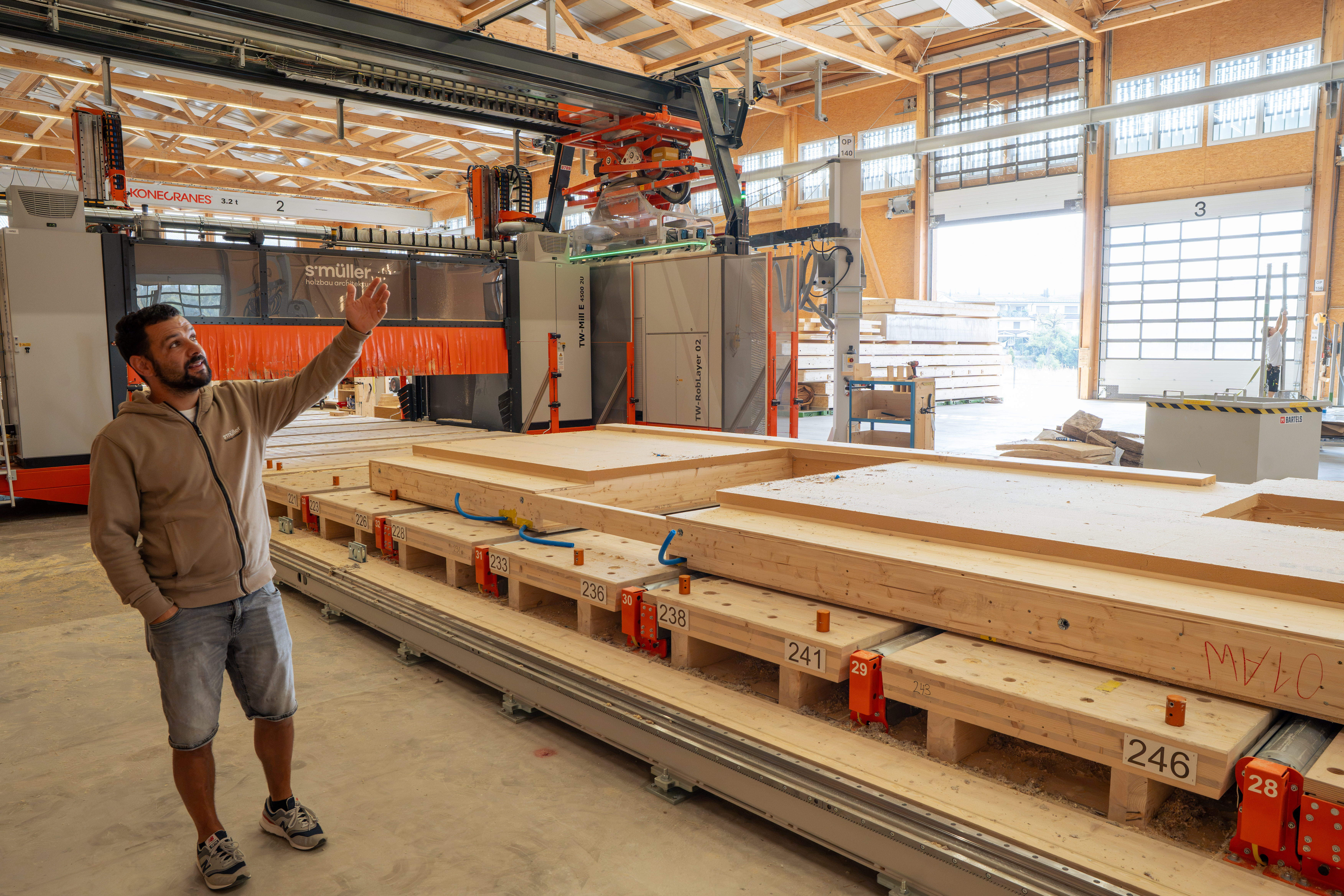
What’s it like to work behind facades and windows equipped with PV modules? “I don’t really notice it at all,” says an employee we meet in the enormous production hall. A 100-meter-long machining line with three computer-controlled robots (a CNC woodworking machine) runs through the 3,300-square-meter hall. Inside the hall, workers saw, mill, drill, screw, and glue to create prefabricated wood construction elements. The electricity for the machines comes from the solar modules.
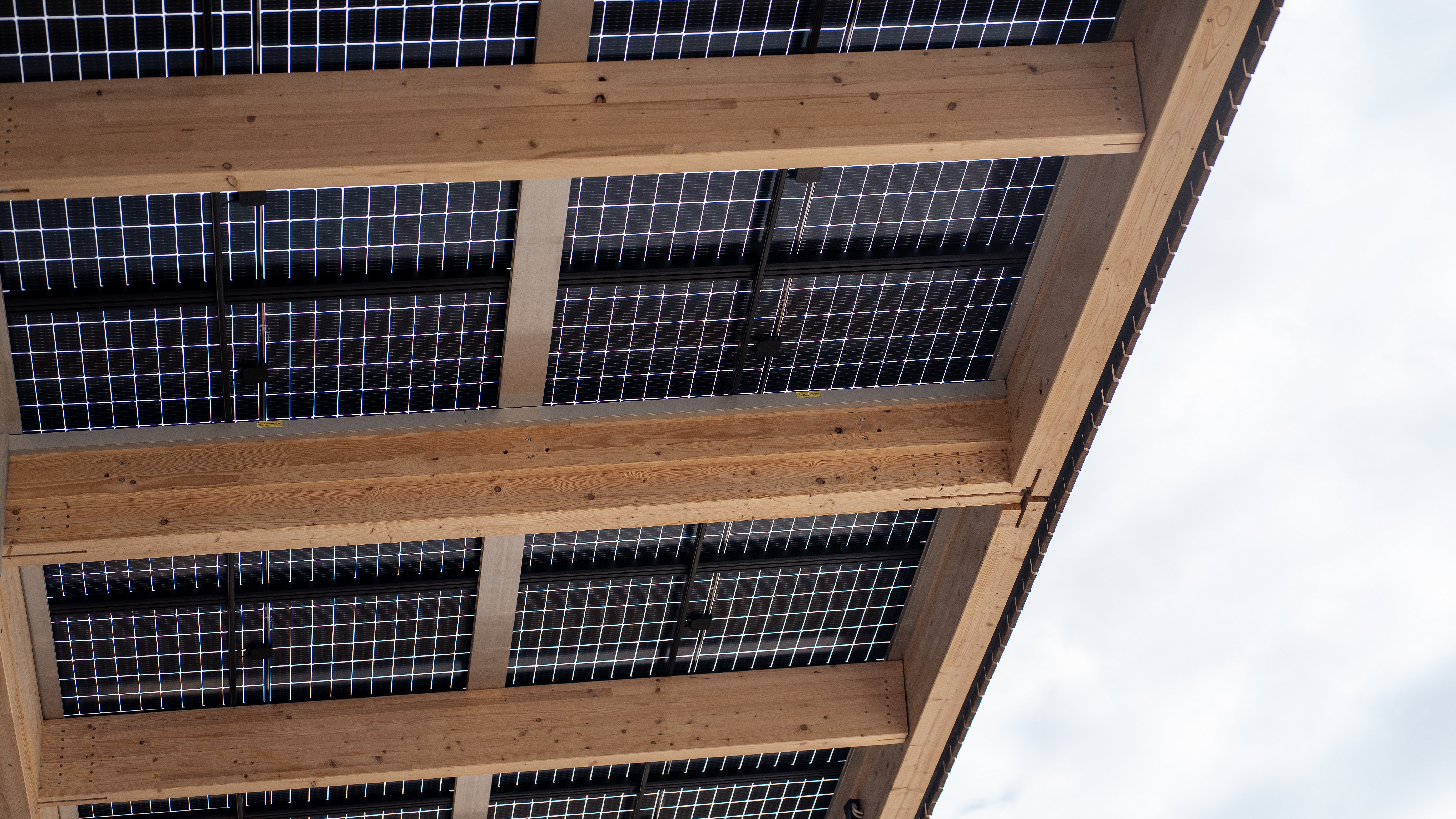
Although PV modules are installed on several windows, it is surprisingly bright inside. The modules on the windows and the cantilevered canopy are translucent. While this means they produce less electricity, it allows enough daylight to enter the hall.
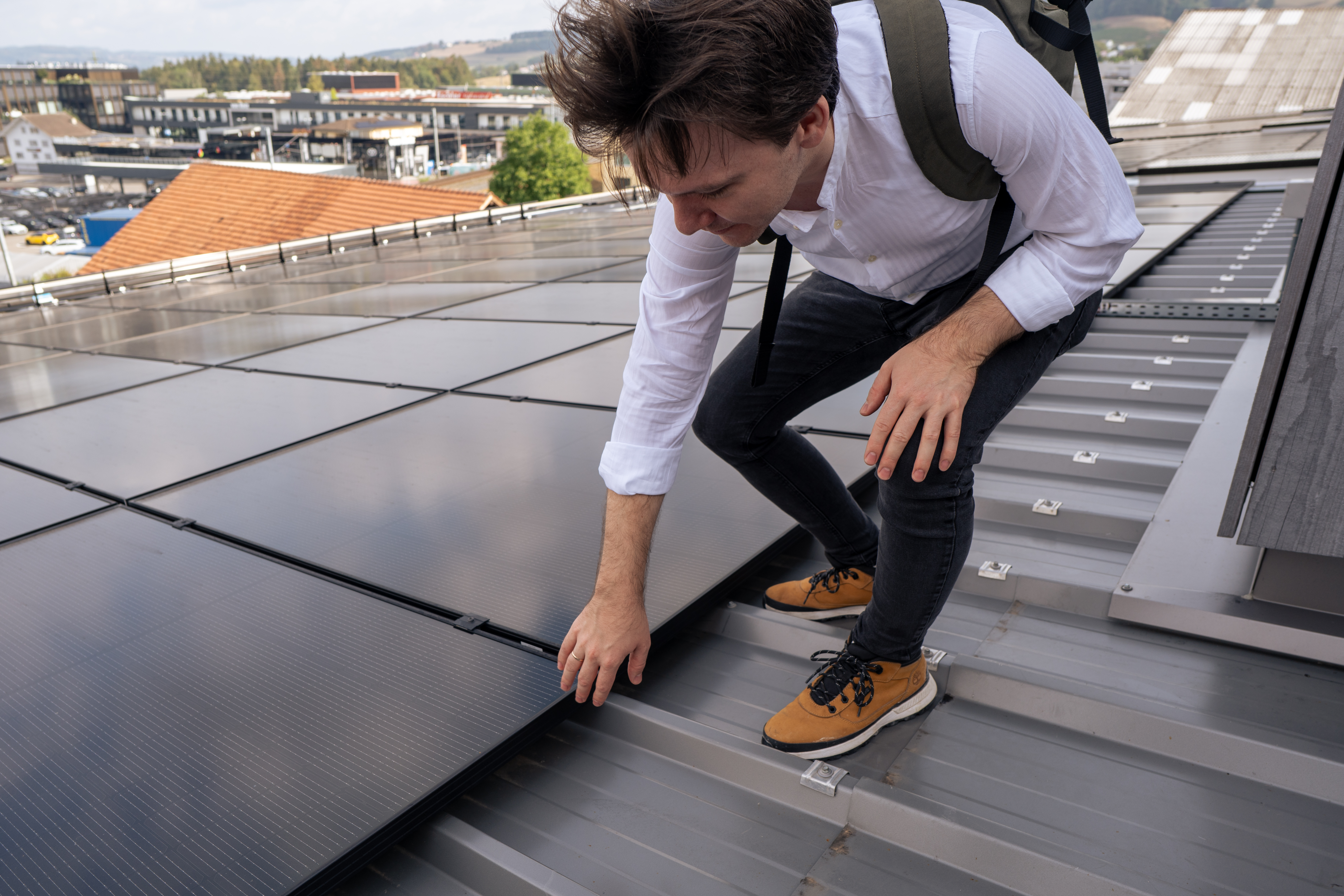
“Translucent photovoltaics are innovative. You still rarely see PV modules on windows in Switzerland,” says Christoph Fischer, project group leader for photovoltaics at Basler & Hofmann.
For him, the PV system is a prime example of large-scale photovoltaics on industrial buildings. “What makes it special is that so many surfaces – roofs, façades, windows with different orientations – are being utilised,” says Christoph Fischer.
Municipal energy supplier owns and markets the electricity
Basler & Hofmann designed the PV system in Wil. Our client was Technische Betriebe Wil (TBW). TBW is the energy supplier for the town of Wil – and the owner of the PV system.
TBW initially commissioned Basler & Hofmann to conduct an analysis of market potential. The goal was to determine how many areas could technically and economically be equipped with solar modules. The analysis of market potential was followed by detailed planning. Project manager Christoph Fischer developed several layout options. This made it possible to compare which building surfaces were technically suitable for photovoltaics and which configurations made economic sense.
Later, Christoph drafted the invitation to tender to find a PV system installer. TBW and Müller Holzbau were able to choose from five bids. “It was important to us to strengthen the regional value chain. That’s why we decided on a regional solar installer,” says CEO Stefan Müller. This installer also sourced its PV modules from Europe, rather than from China as is customary.
Contracting as a Win-Win Model
The PV system was thus created as a joint project: S. Müller Holzbau AG provided the space and coordinated the installation alongside the construction of its new building. TBW owns the system and sells the electricity that Holzbau AG does not need for its own use on the open market.
The timber construction company receives electricity for its own use from TBW at a favorable, fixed price. This allows it to use solar power from its own building without having to finance and operate the PV system itself. Once the PV system has paid for itself in a few years, ownership will transfer to the timber construction company.
S. Müller Holzbau AG and TBW have formalised this partnership in a contract. “The contracting model creates a win-win situation for both sides,” says Müller. His company receives solar power at a predictable long-term rate, whilst TBW can market additional renewable energy.
Results After One Year of Operation
Thomas Marti, site manager and head of the construction team at S. Müller Holzbau AG, is also pleased with the results. “We optimised our new building for maximum solar power production and are meeting our own energy needs very well,” says Marti. The construction period was challenging at times, however. “When it comes to integrating photovoltaics into facades, the contractors sometimes still lack experience,” says Marti.
Today, the PV system on the industrial building in Wil has been in operation for more than a year. CEO Stefan Müller’s assessment is positive: “We would install the PV system in the same way again,” he says.
Does Müller have any advice for other companies considering installing photovoltaic systems on their industrial buildings? “I would recommend that all companies adopt a partnership model with an energy supplier,” says Müller.
His site supervisor, Thomas Marti, adds: “A PV system like this is an attractive option for companies with high energy consumption.” However, it’s essential to assess early on which areas are suitable, how the PV system can be integrated structurally, and whether the grid connection is sufficient to feed surplus electricity into the grid.

![[English] Photovoltaik an und auf Gebäuden - Umwelt Arena](/fileadmin/_processed_/4/f/csm_23-10-30_SIA_Merkblatt_PV-Umwelt_Arena_24_dd6ae5bf44.jpg)