15 years of planning: Alpine Rhine dossier submitted to the authorities
![[English] Alpenrhein Frutzmündung](/fileadmin/_processed_/e/1/csm_1_Heute_A1-Frutzm%C3%BCndung_cda07a44ea.jpg)


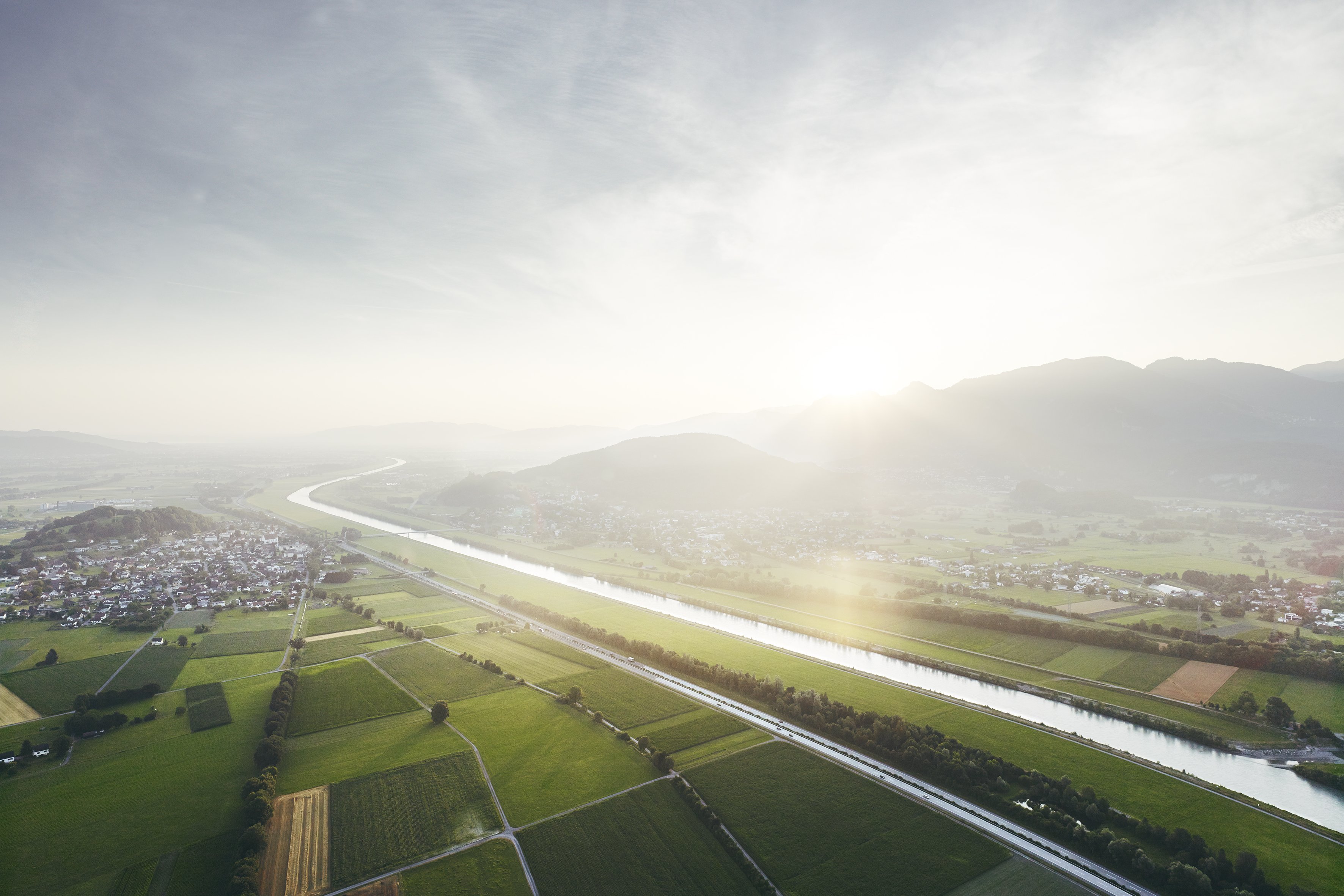
After 15 years of planning, the binational Alpine Rhine ("Rhesi") flood protection project has reached a decisive milestone: the project documents have been submitted for approval in Austria and handed over for preliminary review in Switzerland. Basler & Hofmann is leading the international planning team and is responsible for the project planning of one of the four sections of the Rhine. "Rhesi" is Europe's largest renaturation project.
For Markus Mähr, interim Managing Director of International Rhine Regulation, the submission of the project documents for official review at the end of May 2026 was "a historic moment" (see press release). Fifteen years of planning work are embedded in this dossier. Accordingly, it is massive: the "Rhesi" dossier comprises 763 enclosures, 145 technical reports and plans covering a total area of 500 square meters.
"We practically wore our fingers out writing the 145 reports, which total around 23,000 pages," says Christoph Rüedlinger, Head of Water at Basler & Hofmann with a wink. He serves as the overall project manager for the Swiss side of this binational mega-project and simultaneously leads the international planning team consisting of nine engineering firms. His team is also planning one of four sections of the Rhine. As head of the international planning team, Christoph has, incidentally, read a large portion of the 23,000 pages of the approval dossier himself—sometimes several times.
Protection against a 300-year flood
"Rhesi" stands for “Rhine, Recovery and Safety”, embodying the core purpose of the flood protection project. On the 26-kilometer river section between the mouth of the Ill at Rüthi (CH) / Feldkirch (AT) and Lake Constance, the greatest flood risks exist along the entire Alpenrhein. The more than 100-year-old dams are in poor condition, and the river's discharge capacity is insufficient. A very large flood could cause damages amounting to tens of billions of euros in the densely populated Rhine Valley.
The "Rhesi" mega-project aims to improve flood protection for approximately 300,000 residents and the vital economic region of the Rhine Valley. The valley is to be protected against a flood that statistically occurs once every 300 years. Currently, the riverbed can accommodate a flow of 3,100 m³/s, which corresponds to a flood that statistically occurs every 100 years. In the future, the discharge capacity is to be increased to 4,300 cubic meters per second.
The existing flood protection dams will be renewed or renovated. In addition, so-called emergency spillways are planned to prevent dam breaches in the event of an even greater extreme flood. To achieve this, the dam crest will be slightly lowered in certain areas, allowing water to be controlledly diverted from the Rhine into areas with low damage potential in extreme cases.
Largest renaturation project in Europe
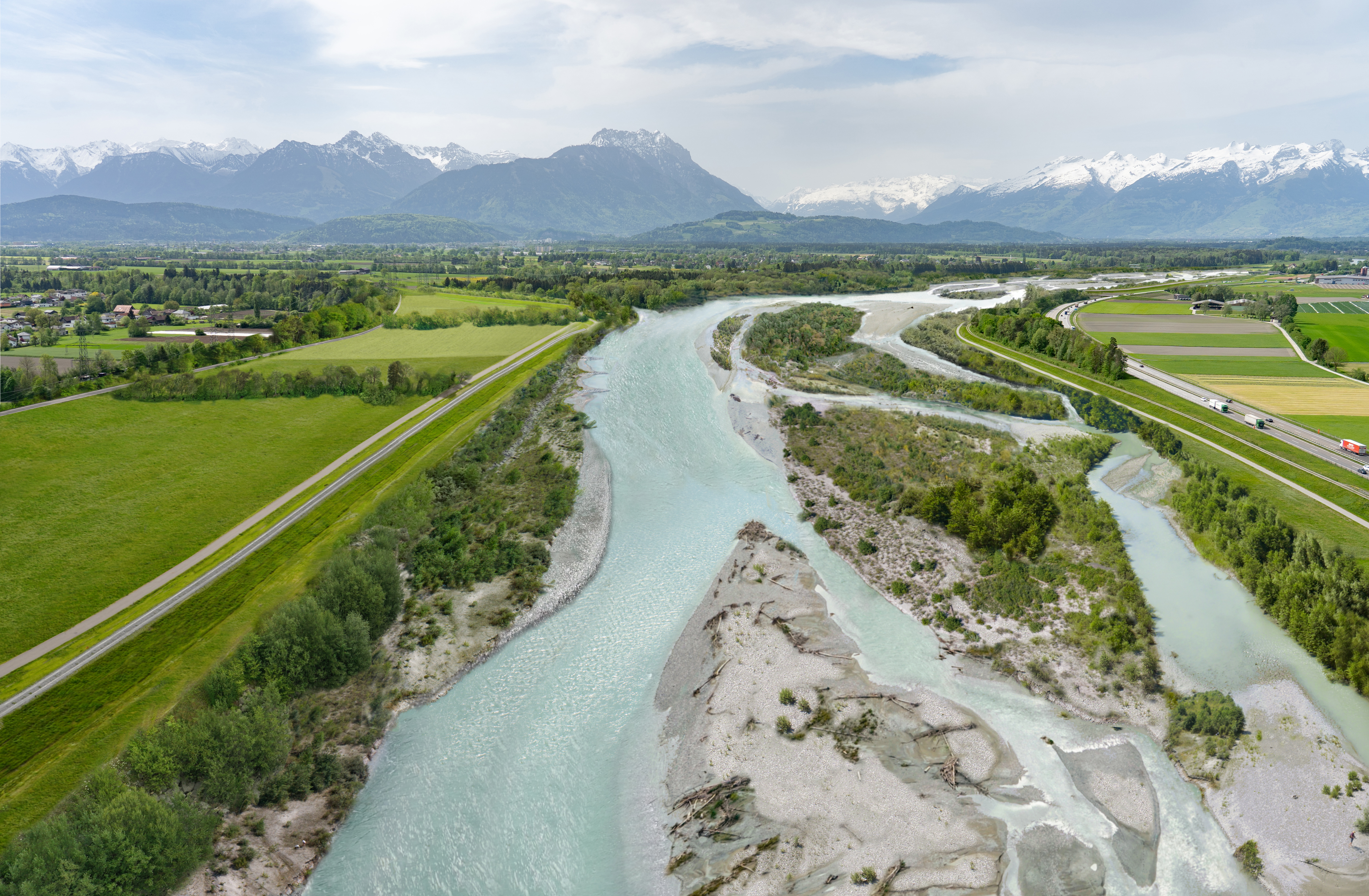
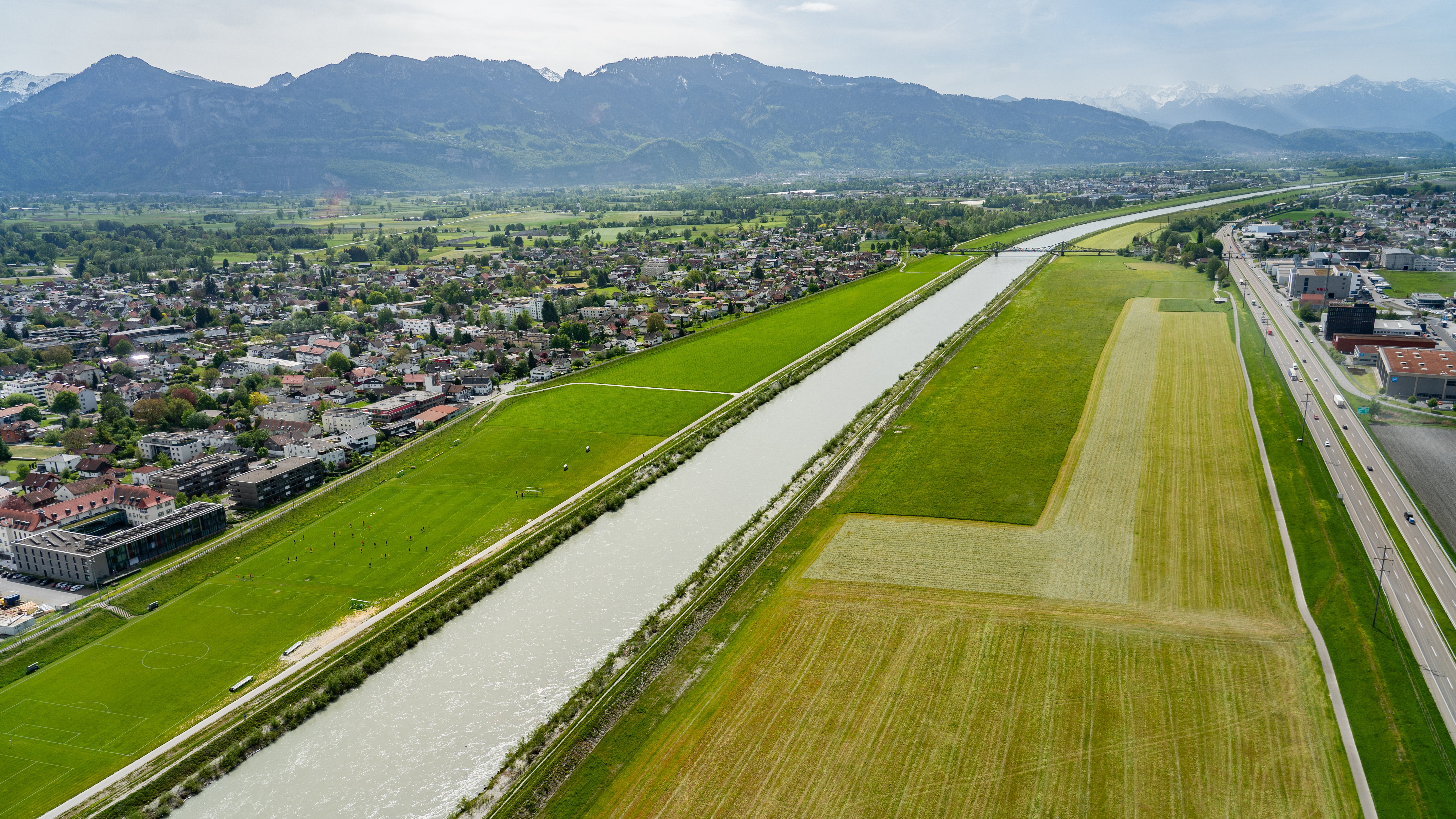
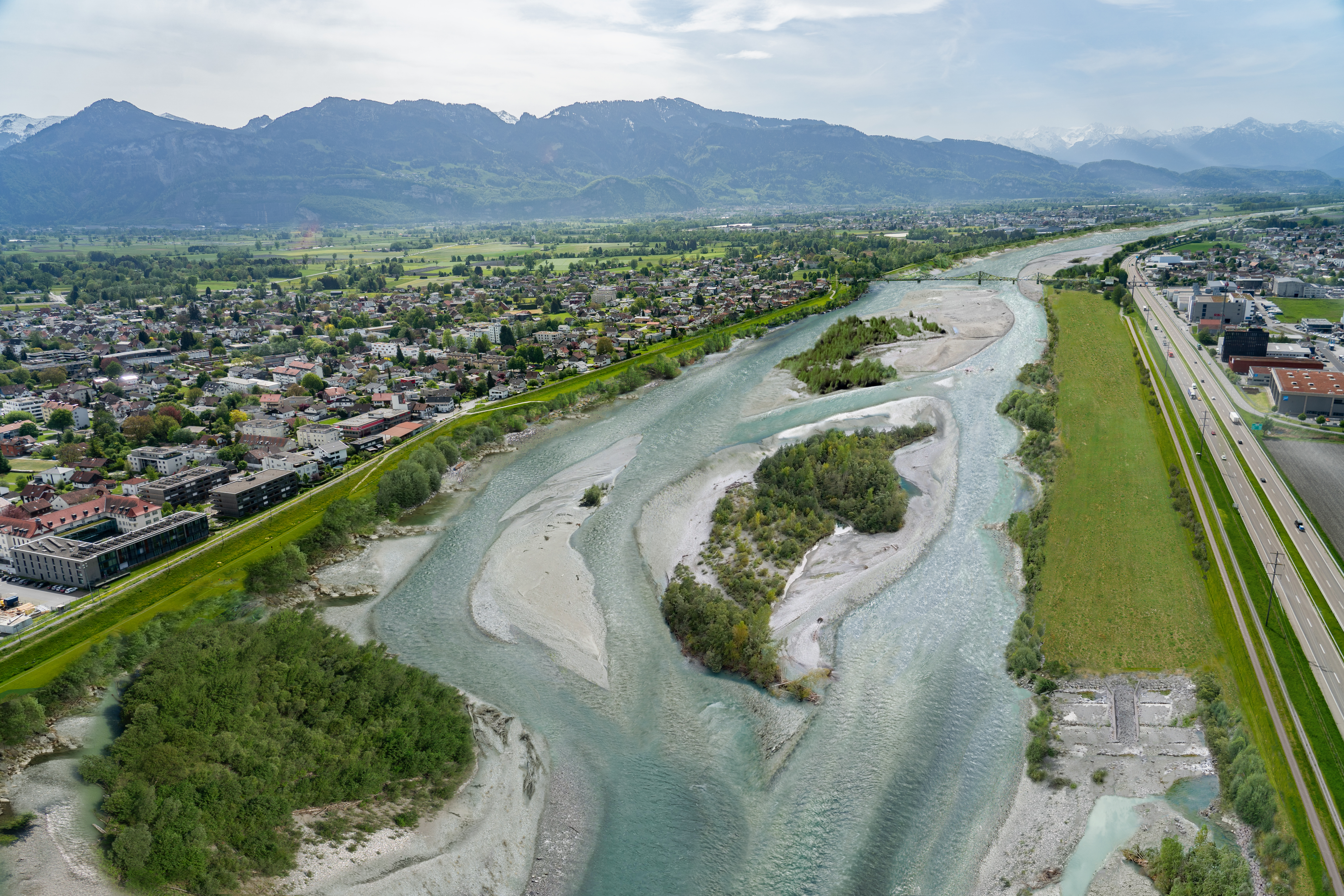
The "Rhesi" project is not only a major binational flood protection project, but also the largest renaturation project in Europe, according to the International Rhine Regulation. By widening the bed of the Rhine - the so-called channel widening - the Rhine is to be transformed from a straightened channel back into a living river landscape with river arms, sandbanks, floodplain areas and low points. This will create new habitats for animals and plants. The area will also be made more accessible for local recreation, for example with cycle and pedestrian paths along the embankments or with sunbathing lawns directly by the river.
Different approval processes in both countries
For the mega-project to be implemented, it must be approved in both Switzerland and Austria. In Austria, the submission of the dossier initiated the Environmental Impact Assessment (EIA) process. In Switzerland, the documents were submitted to the federal government and the Canton of St. Gallen for preliminary review, paving the way for the subsequent public inspection phase.
A multi-generational project, also for Basler & Hofmann
Basler & Hofmann is involved in the project with experts in hydraulic engineering, geoinformatics, bridge construction and geotechnics. Our specialists have, among other things, created a 3D planning model of the future river course, from which 2D plans can be generated at the touch of a button.
For Christoph Rüedlinger , the project work is "very meaningful and motivating", as he says. Both the local population and nature will benefit from the project: "People will be better protected from floods and the Alpine Rhine will become a near-natural river again," says Christoph. "I feel fortunate to be able to work on and coordinate the planning of such an extraordinary mega-project in hydraulic engineering during my professional career."
It is also a multi-generational project. The construction work alone is expected to last 20 years.
Further information:


![[English] Vegetationsaufnahme Umweltbaubegleitung am Kerenzerberg](/fileadmin/_processed_/f/d/csm_1_Header_Vegetationsaufnahme_BeatrixIMG_1576_f3d4a08efc.jpg)