One Year Later: Nature Returns
![[English] Vegetationsaufnahme Umweltbaubegleitung am Kerenzerberg](/fileadmin/_processed_/f/d/csm_1_Header_Vegetationsaufnahme_BeatrixIMG_1576_1fd449a5bb.jpg)

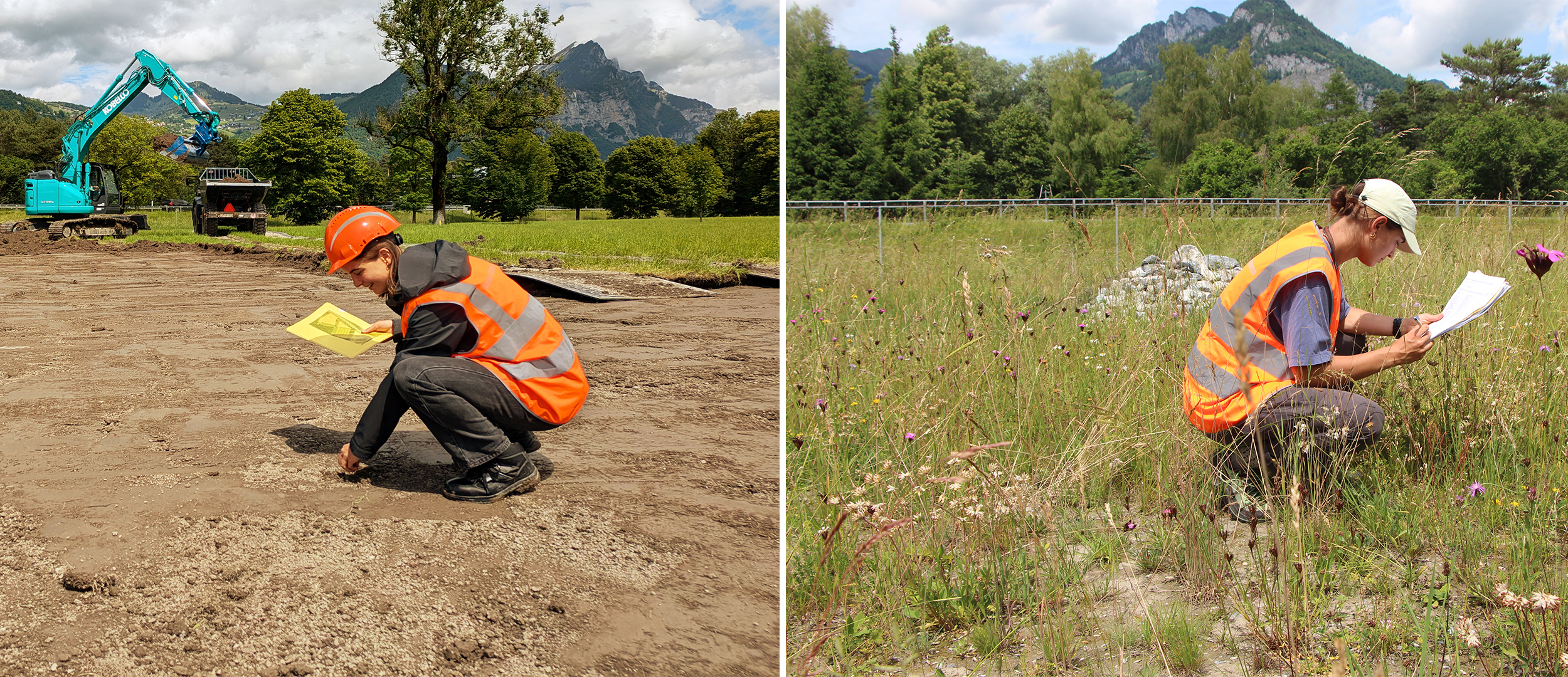
Where a year ago there was just a brown patch of ground, daisies, Carthusian carnations, and viper’s bugloss are now in bloom. The Kerenzerberg site is a striking example of how ecological compensation measures create new habitats. Basler & Hofmann is part of the environmental construction support team associated with the tunnel construction site at Kerenzerberg.
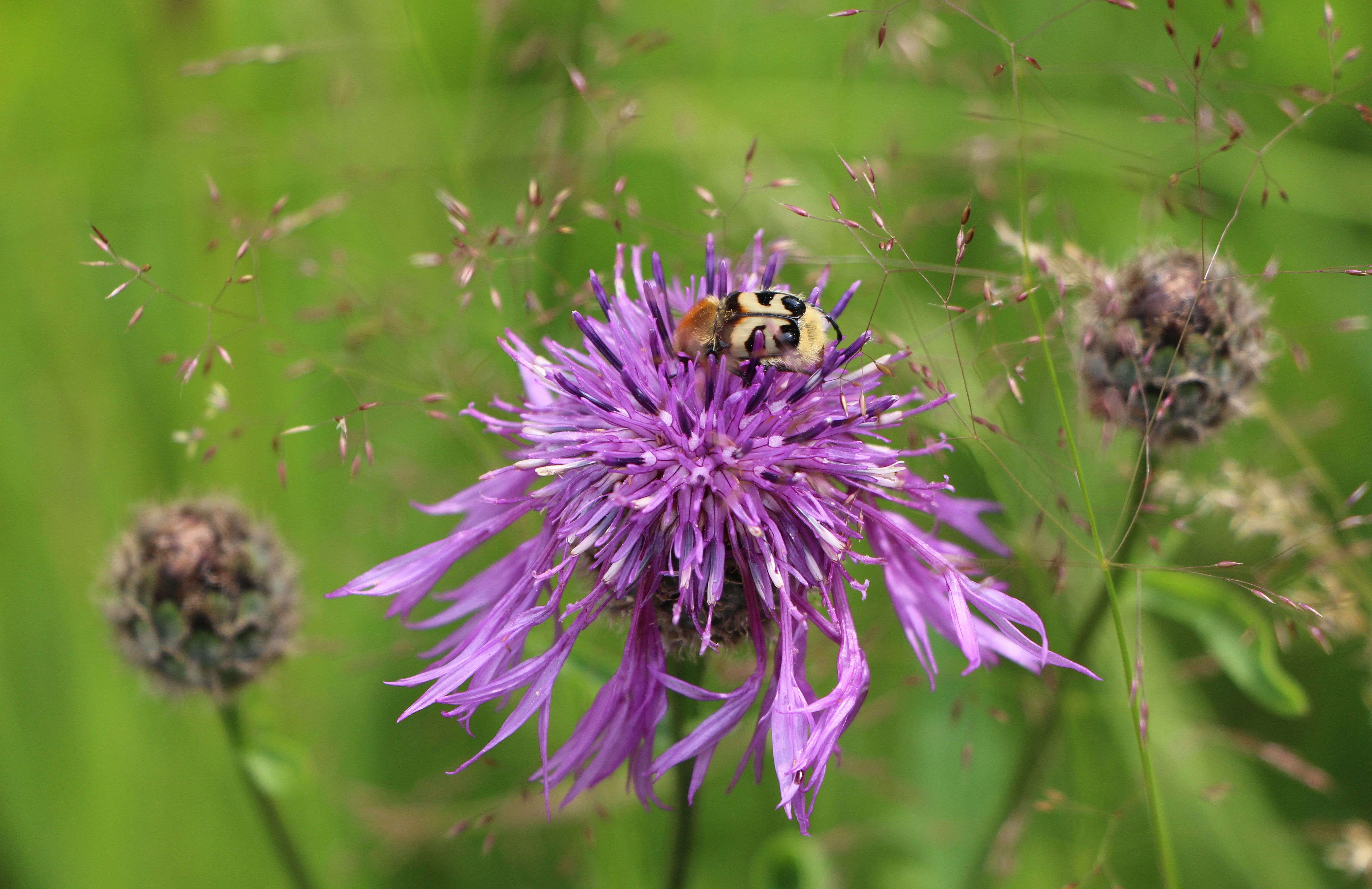
“A year ago, everything here was still brown; now everything is in bloom! It’s wonderful to see,” says Beatrix Junghardt, a project engineer at Basler & Hofmann. The environmental scientist is standing on Kerenzerberg (GL), crouches down, and begins her vegetation survey. She checks which plant species have grown since last year. There are quite a few: For example, Beatrix finds the common viper’s bugloss here, stretching its blue flowers toward the sky. Next to it, the Carthusian pink displays its purple flowers and the daisy its white ones. These species are typical of nutrient-poor meadows.
Ecological Compensation and Contingency Measures
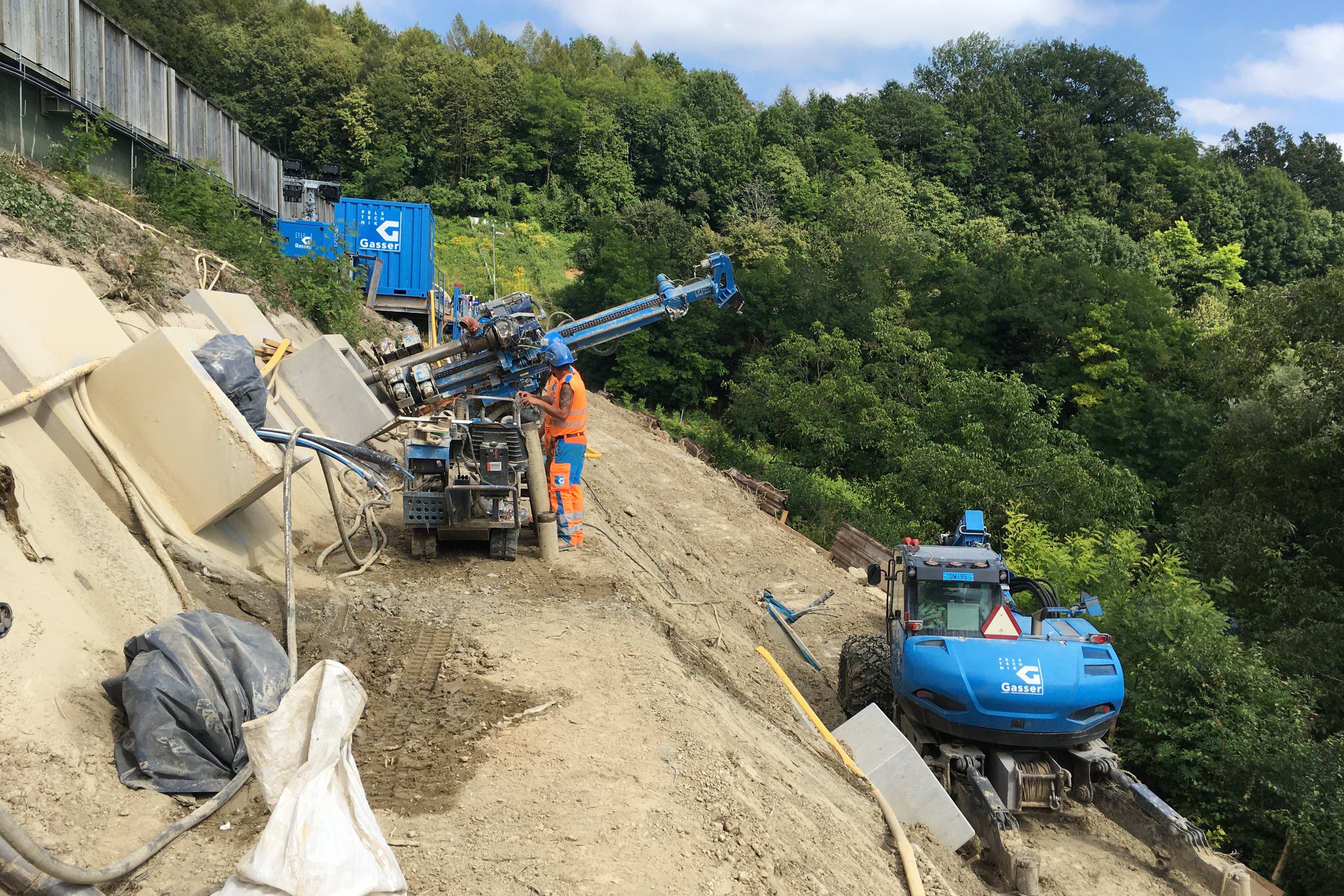
In early summer 2025, excavators removed the top, nutrient-rich layer of soil at this site to create the conditions necessary for a nutrient-poor meadow. Seeding followed in the summer after the soil was removed. The nutrient-poor meadow, which is now blooming here for the first time, is an ecological compensation and contingency measure. It was created on behalf of the Federal Roads Office (FEDRO) to offset the environmental impacts associated with the Kerenzerberg tunnel construction site. The Kerenzerberg Tunnel on the A3 highway is currently undergoing extensive repairs and safety upgrades.
Beatrix is part of the engineering consortium (IG) with Basler & Hofmann AG and Sieber Cassina + Partner AG. The consortium planned the compensation and contingency measures or compensating measures and is now overseeing their implementation.
Over 45 plant species after just one year
In June 2026, during her vegetation survey, Beatrix counts over 45 plant species in the field that was still brown just last year. A very good result.
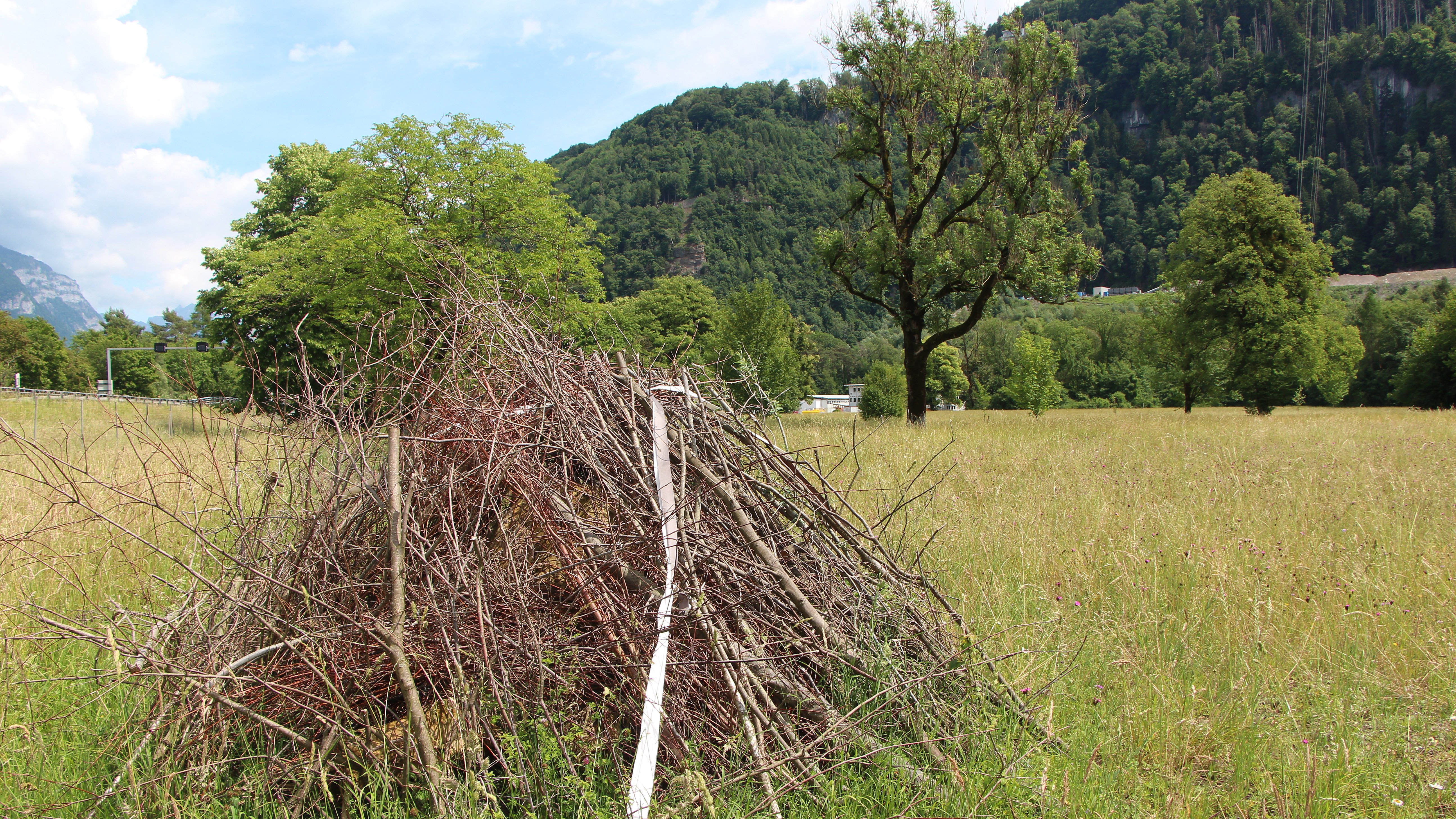
“We aim to create a mosaic of habitats on Kerenzerberg where a wide variety of species can thrive,” explains Beatrix. This includes animals as well. To accommodate them, hedges, rock piles, and brush piles were created, among other things.
The hedges—most of which run along the highway fence—connect the forested areas in the region; deer and hares like to move through such hedges. Reptiles such as lizards and other small animals use the stone piles as shelter and winter quarters. And the brush piles provide shelter for small mammals such as mice, as well as amphibians and reptiles. Birds also like to nest in brush piles. The brush piles also attract insects, which in turn serve as food for the birds.
Strip tillage also promotes greater biodiversity
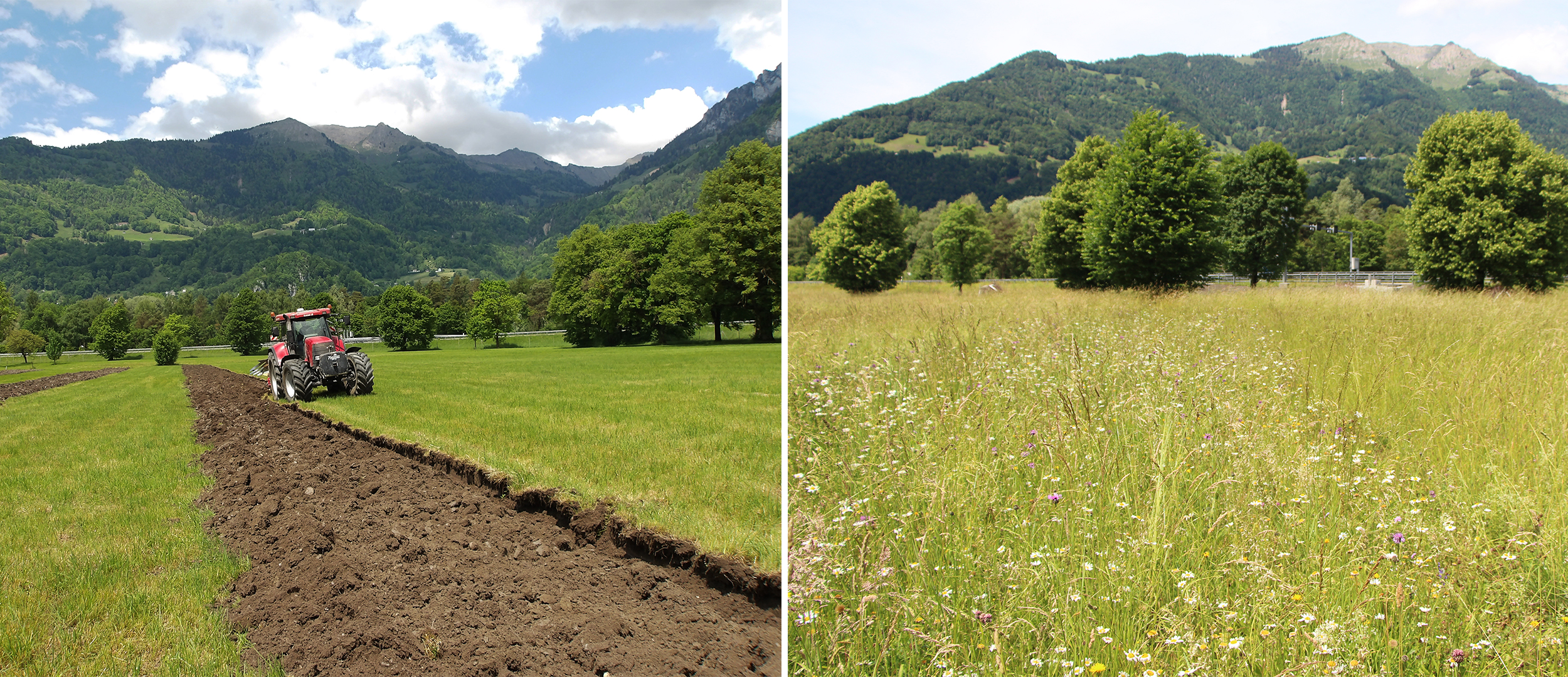
Nutrient-poor meadows thrive only on nutrient-poor soil. If a field is already reasonably nutrient-poor but needs to be optimized for even greater biodiversity, this can be achieved by plowing the soil in strips.
Such tilling took place in 2025 on another field on the Kerenzerberg: A tractor pulled a plow, which turned over the topsoil and brought stones from a deeper layer to the surface. This created soil in strips that was even slightly lower in organic matter and thus optimal for nutrient-poor meadows.
Restoration of nutrient-poor meadows to continue until around 2030
Over the next few years, Beatrix and her team will continue to monitor the development of these areas. As biodiversity increases, the nutrient-poor meadows will continue to improve in ecological quality. The areas are expected to be transferred to agricultural operations in 2030, which will manage them extensively in the future.

![[English] Alpenrhein Frutzmündung](/fileadmin/_processed_/e/1/csm_1_Heute_A1-Frutzm%C3%BCndung_52a5dc904d.jpg)