The Eco-Friendly Alternative: A Hybrid Design for the School Building in Root
![[English] Holzbau Hybridbau](/fileadmin/_processed_/b/a/csm_0_Header20260507_Bau_Holz_3OG_gerade_855b45ecb5.jpg)

Wood meets steel, steel meets concrete: a new school building is under construction in Root (LU), with a structural framework that combines the best of these three building materials. The structural work was completed in early June 2026. Hybrid buildings such as this new school can be worthwhile: for the school in Root, the hybrid construction method offers both environmental and economic benefits.
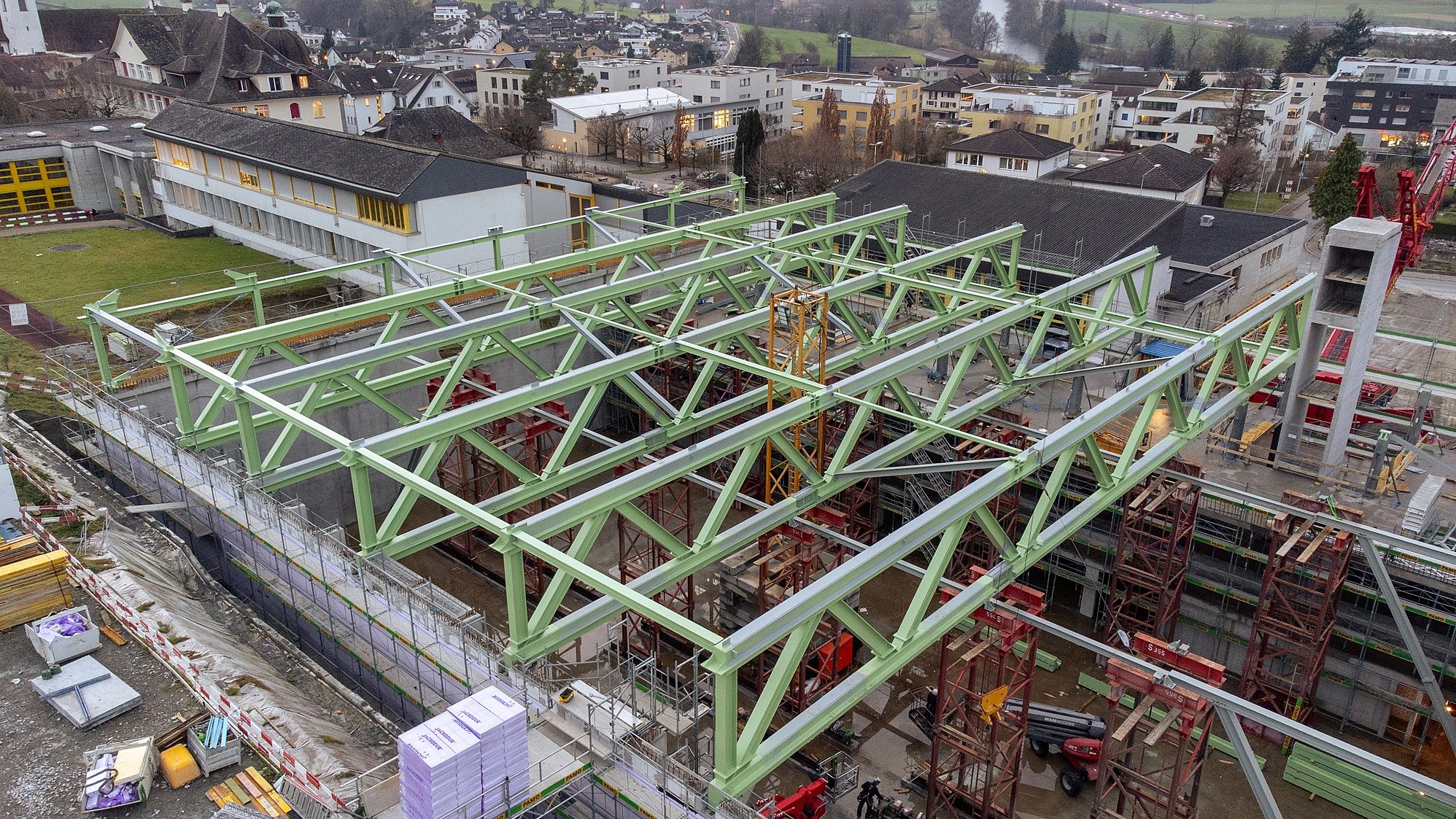
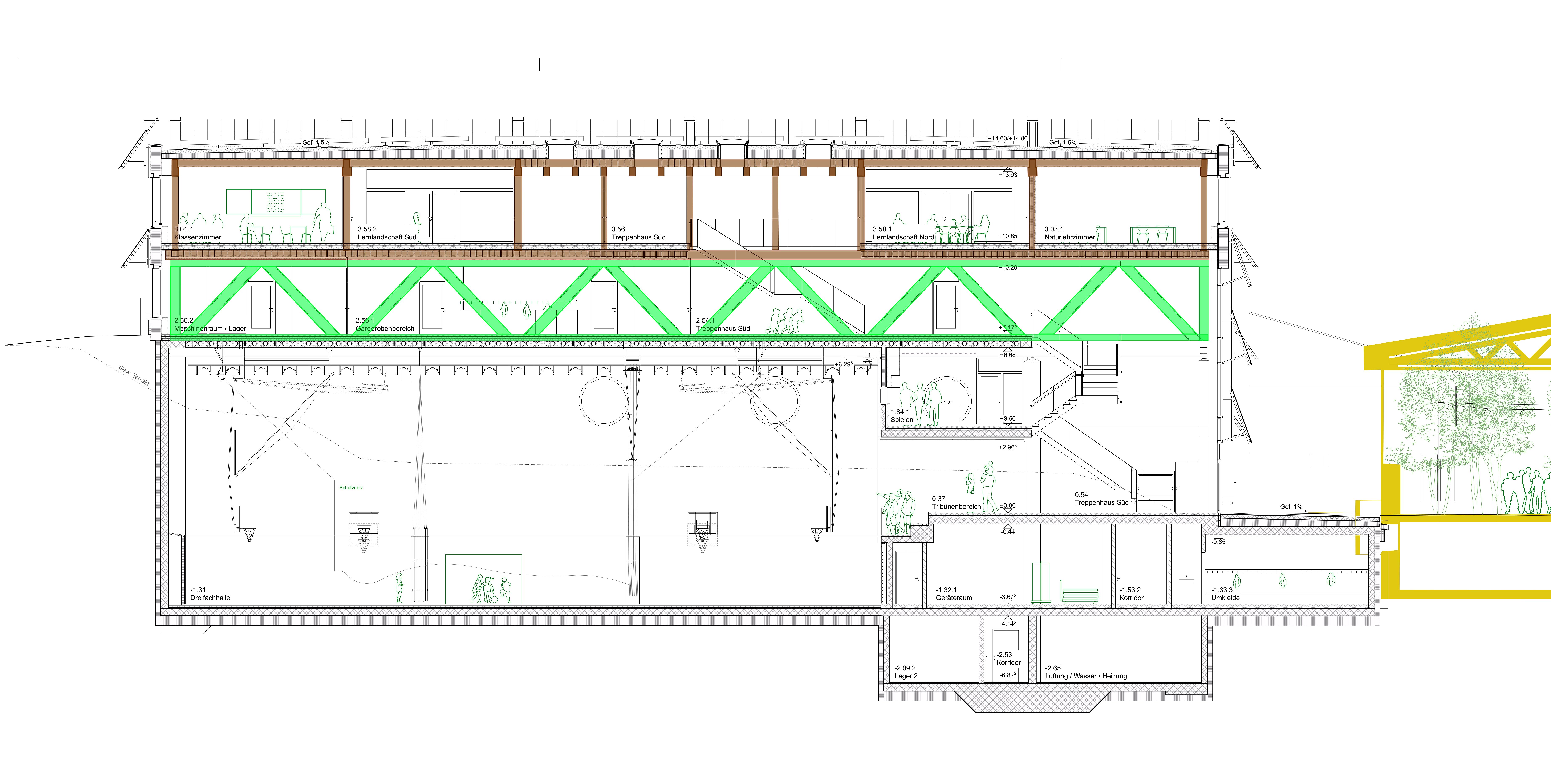
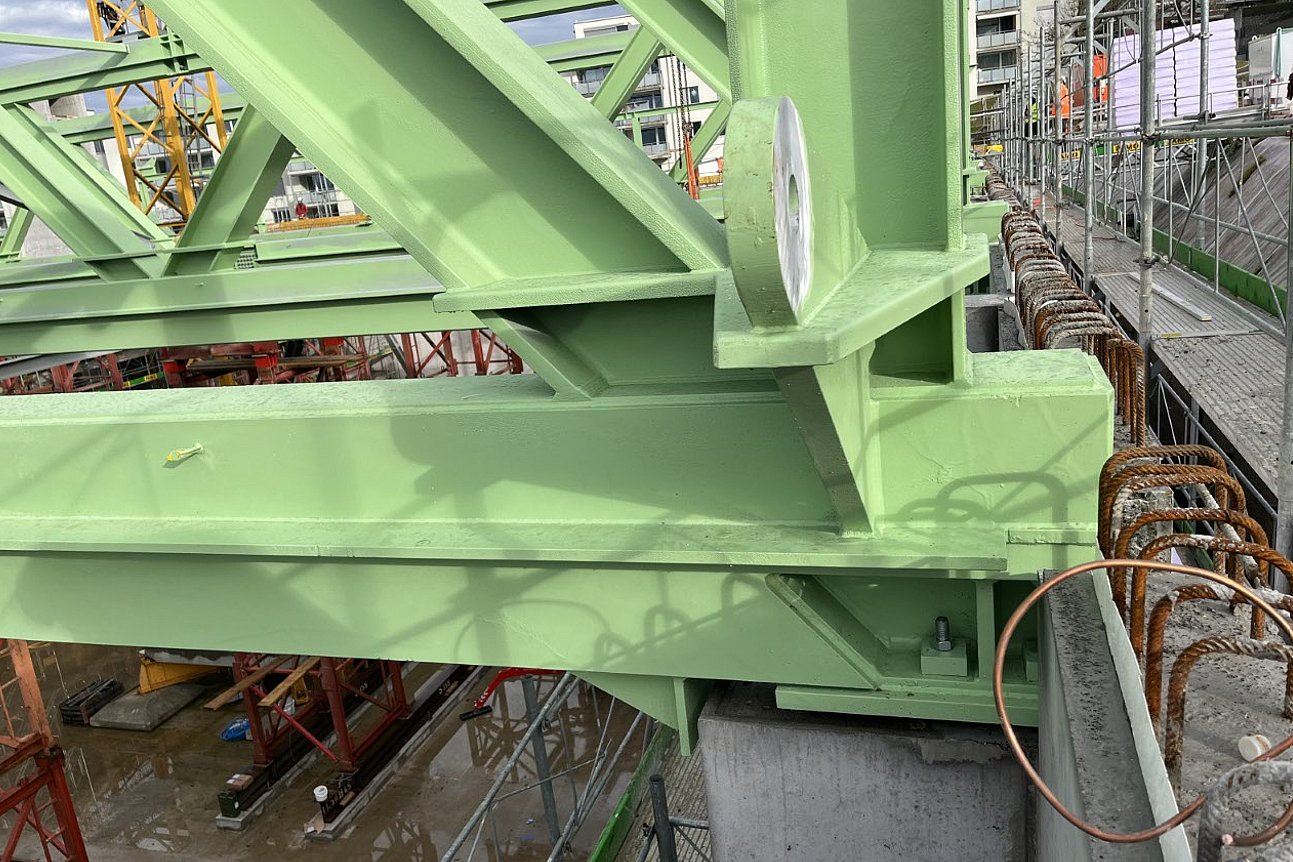
Even the installation of the steel truss girders in December 2025 was a highlight. A 500-metric-ton crane precisely lifted the six massive girders onto the support points of the three-story triple-purpose gymnasium. This structure had previously been built from reinforced concrete, a composite material consisting of concrete and reinforcing steel. Each of the green-painted steel truss girders is a good 42 meters long and 4.3 meters high. They support the two upper floors of the school building, which will house the workshops and classrooms.
Jointly designed by specialists in wood, steel, and concrete structures
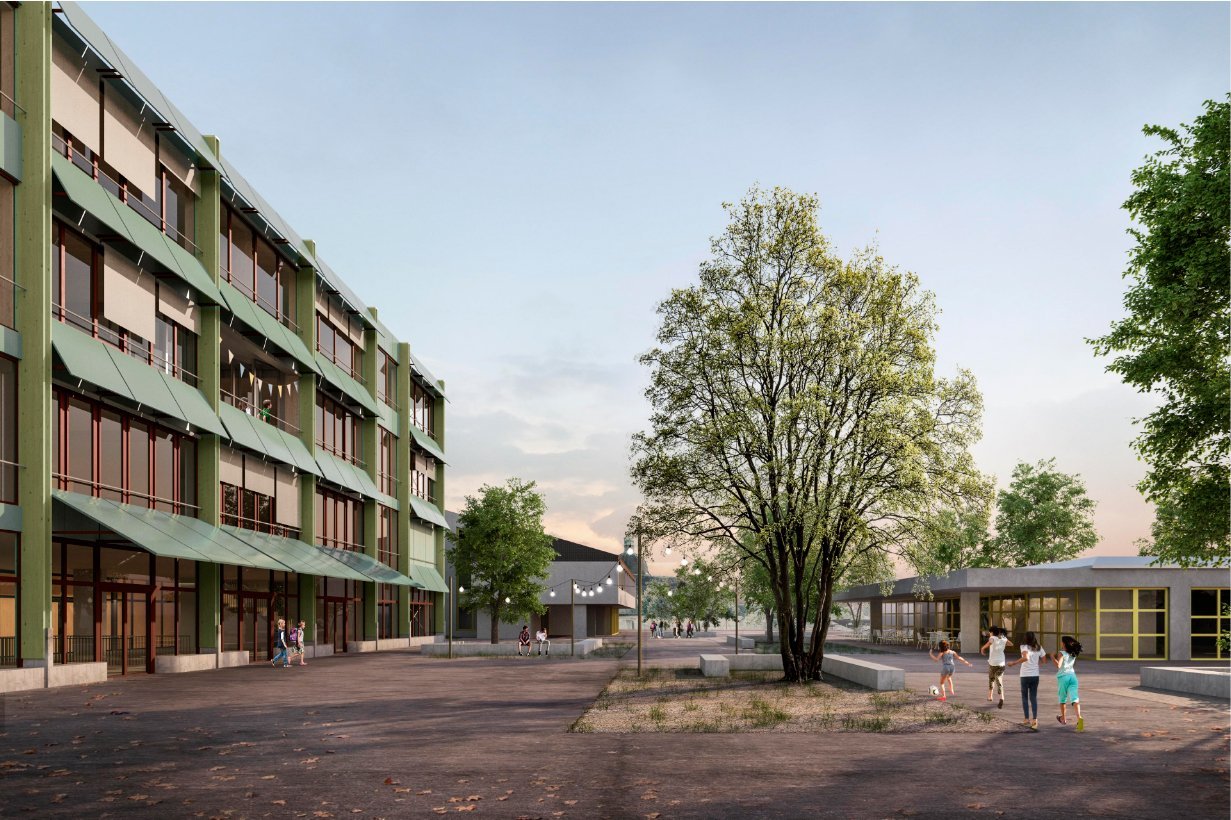
The new school building serves as a prime example of how experts in wood, steel, and concrete construction work together to develop the optimal solution for a concept design. On the Basler & Hofmann side, the team includes Arnaud Deillon, project manager specializing in steel construction; Miriam Kleinhenz, project engineer and timber construction specialist; and Matthias Wyrsch, project manager for structural maintenance and Industrial Buildings. The school’s structure consists of concrete in the lower section, with steel trusses resting on it in the middle section. The top floor is made entirely of wood. The school is what is known as a hybrid structure. It combines the strengths of each material.
The school building was designed by the architectural firm Bürgi Burkard von Euw. They had already consulted our structural engineering experts during the competition phase to develop the optimal structure for the building.
Wooden Ceiling Supported on Steel Trusses
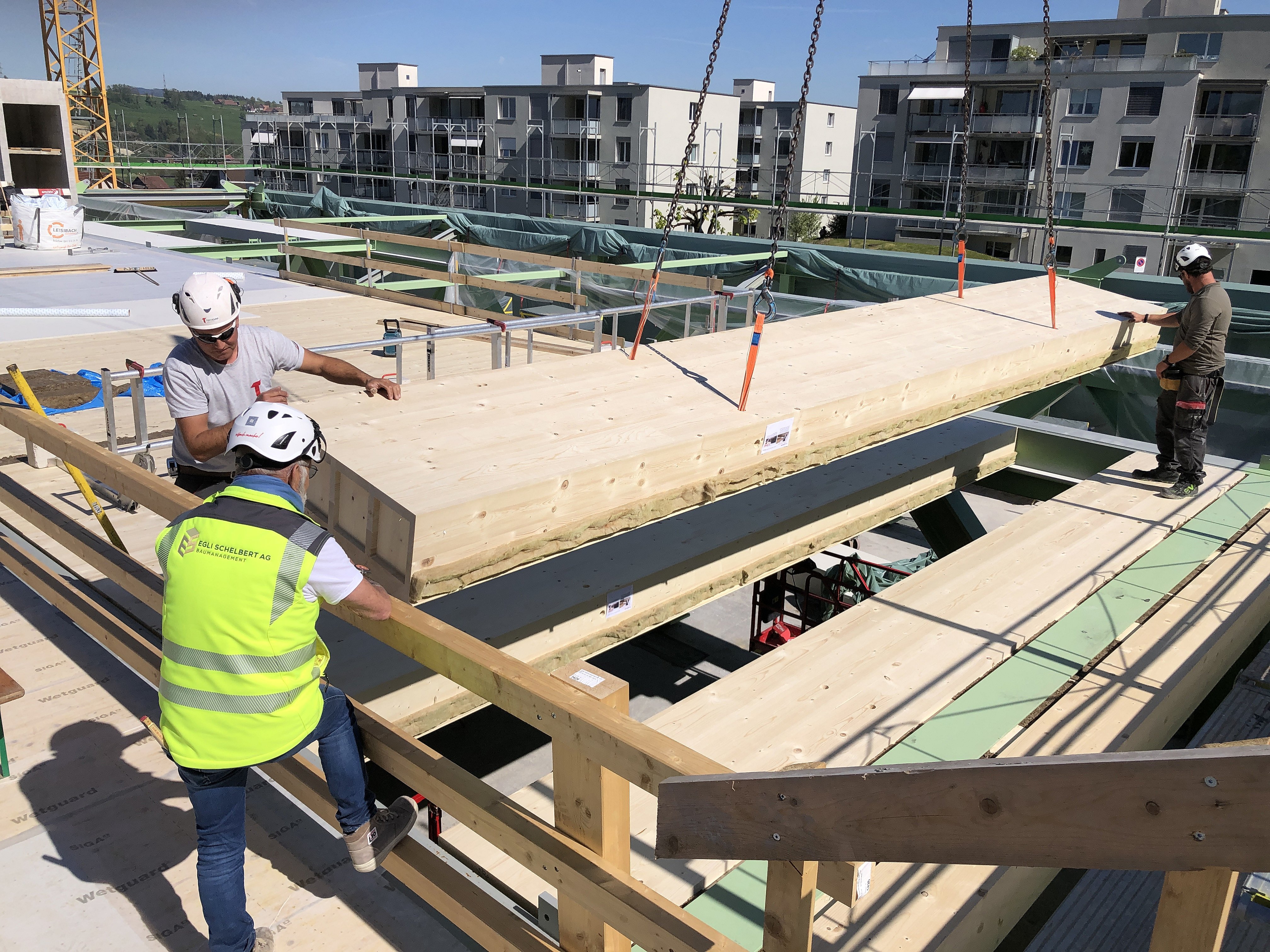
For our structural engineering specialists, the next highlight on the construction site came in April 2026: this was where wood met steel. The first wooden floor for the two upper stories was laid onto the skeleton of the steel trusses—a crucial moment at the interface between steel and wood construction. “It was crucial that the horizontal steel beams were properly secured to the wooden floor to ensure the floor’s rigidity and prevent the steel trusses from tilting,” reports Miriam Kleinhenz.
Advantages and Disadvantages of Wood as a Building Material
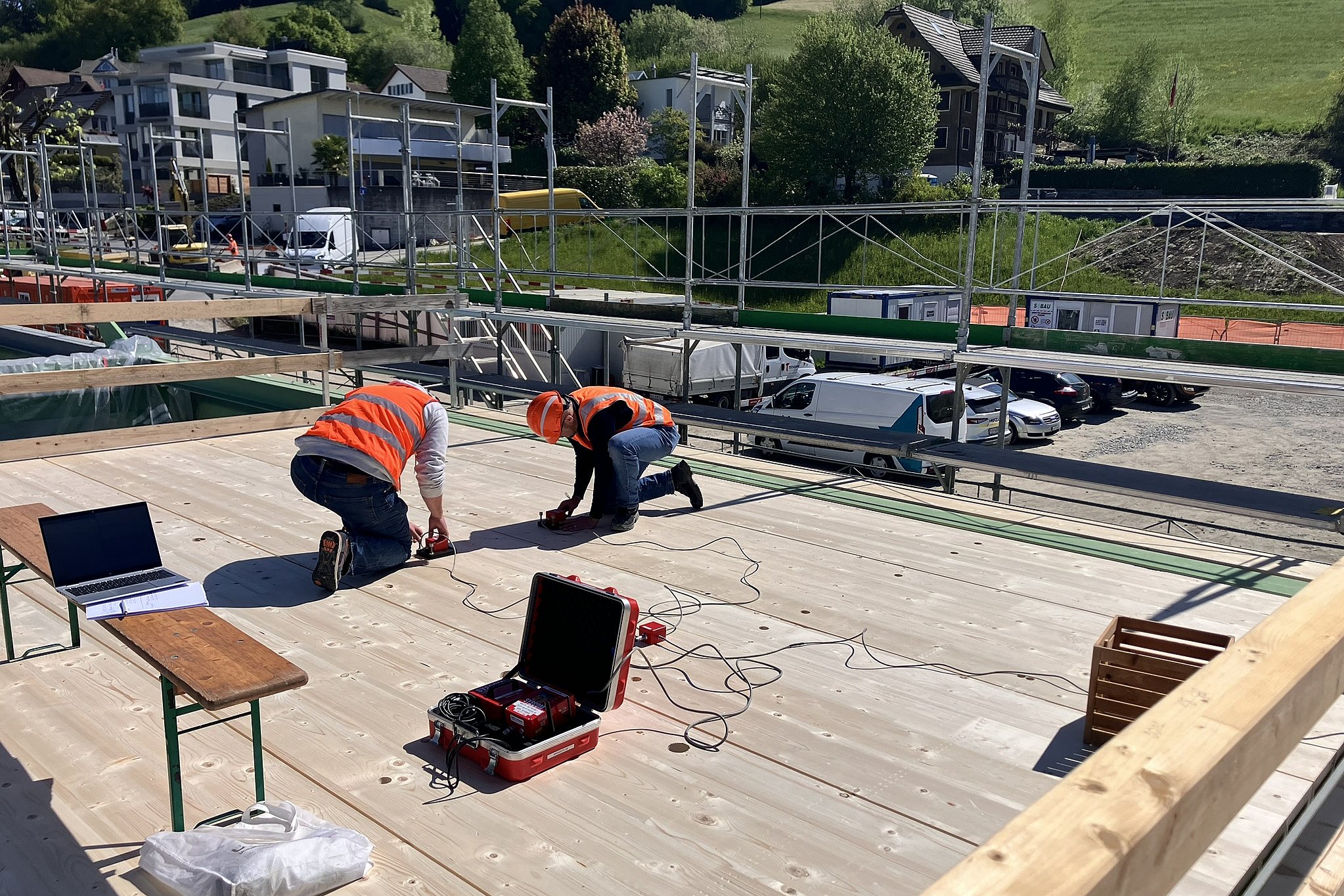
Like any building material, wood has its advantages and disadvantages. Wood is lighter than concrete, which is an advantage for transportation and installation. However, wooden ceilings tend to generate more vibrations. In April, Miriam visited the site with several colleagues to conduct vibration measurements on the wooden ceilings. She and her colleagues wanted to know whether the newly installed wooden ceiling was actually as vibration-resistant as calculated. Our team’s measurements confirmed the theoretically predicted values. The newly installed wooden ceiling passed the practical test.
Making the Most of Each Building Material’s Strengths
It was determined early in the planning process that a hybrid construction method was the best possible way to build this school. By comparing life cycle assessments with cost estimates, the planning team was able to determine which material represented the best ecological and economic solution for each structural component.
For the new school building in Root, the life cycle assessment showed that the advantages of a hybrid construction method with wooden floors on the upper floors outweighed the disadvantages. Hollow-core slabs made of Swiss spruce had the lowest carbon footprint compared to conventional reinforced concrete floors.
Contrary to the common belief that wood construction is always more expensive than reinforced concrete, the construction method using hollow-core wood floors prevailed in the Root project, even in terms of construction costs. Thanks to the lighter weight of the supporting wooden floors, the steel trusses could be constructed with a slimmer profile and using less material, making them more cost-effective.
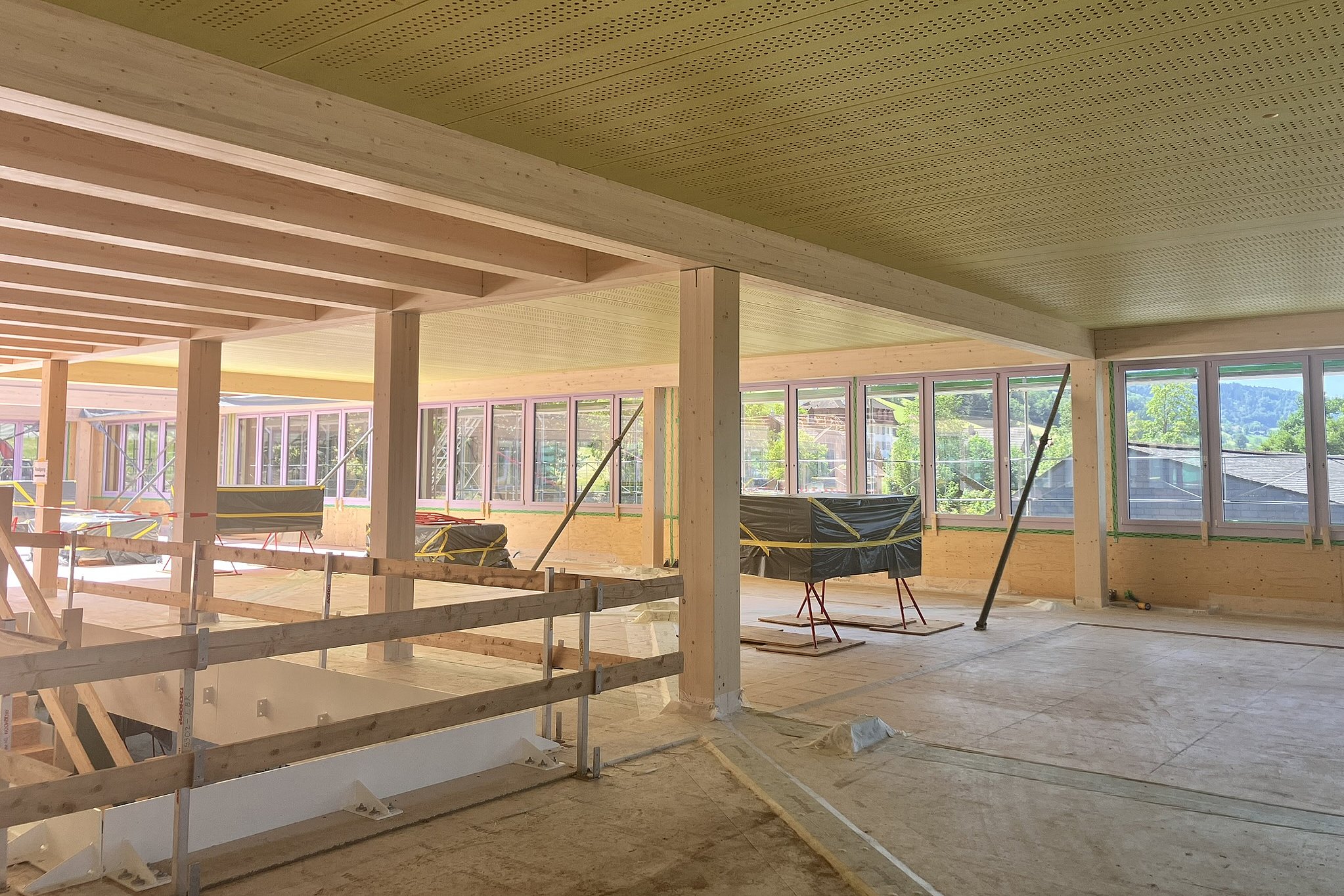
Wood offers another advantage for the ceilings in the workshops and classrooms: the hollow-core slabs improve the acoustics. With a reinforced concrete ceiling, an acoustic ceiling would have been necessary for sound absorption.
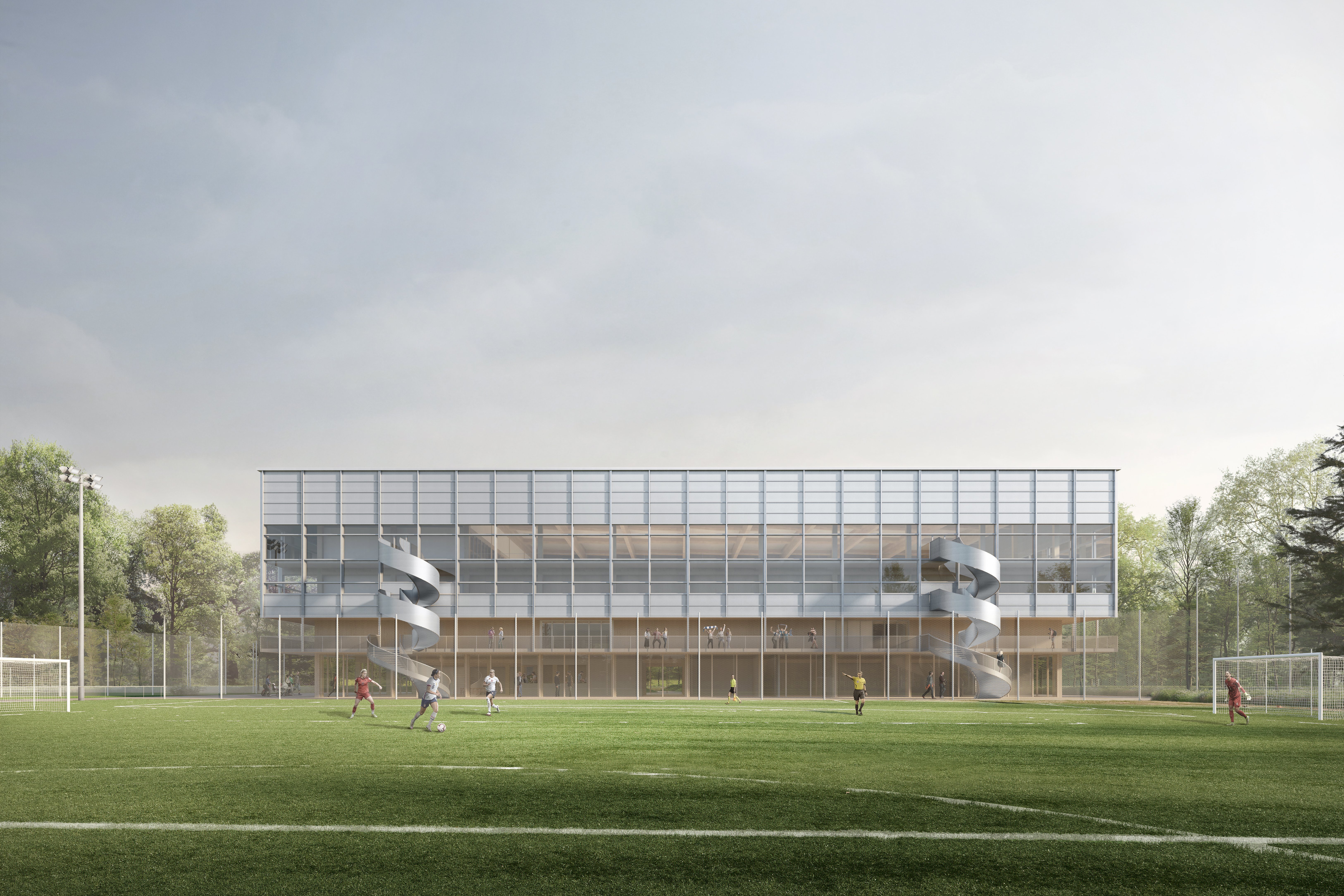
Reinforced concrete is used only in the lower part of the building, near the three-story triple gym. There are two main reasons for this: the watertightness and durability of concrete. Since the school building is being constructed on a slope, the triple gym is located between four and twelve meters below ground level. Consequently, effective waterproofing and materials that can permanently withstand environmental influences below ground level are crucial. The ceiling above the triple gym consists of precast concrete elements and withstands the high horizontal forces of earth pressure.
However, the civil engineering team optimized the gym’s walls for environmental sustainability by designing them as ribbed walls. This saves concrete.
Gym classes will soon begin at the new school building in Root
At the end of May 2026, the topping-out ceremony took place at the construction site; the structural works, made of wood, steel, and concrete, were completed—and with them, the work of the structural engineering team at Basler & Hofmann. In June, the wooden roof will be built, followed by two utility rooms on top of it. The roof will also be greened and equipped with systems for photovoltaics.
If everything continues to go according to plan, students will be able to start the operation of the triple-purpose gym in their new school building in Root in the spring of 2027. The classrooms will follow a little later. Hopefully, the children and teenagers will be able to learn in a relaxed atmosphere beneath the wooden ceilings. Wood creates a warm, calming atmosphere. This is one of the conclusions reached by the meta-study“Health Interaction of Wood – People – Space,”in which Miriam Kleinhenz once participated as a research assistant at the Technical University of Munich.
Up-to-the-minute images of the Hagenmatt school construction project in Root: Webcam and time-lapse footage of the construction site