Contaminated Sites: How the Ritzer Landfill Is Being Remediated


The former Ritzer landfill site in Küttigen (AG), most recently used as a football pitch, is being remediated due to contaminated soil. Basler & Hofmann drew up the remediation plan. What makes it special is that the waste remains in the ground, whilst the leachate and wastewater are treated on site and rendered harmless.
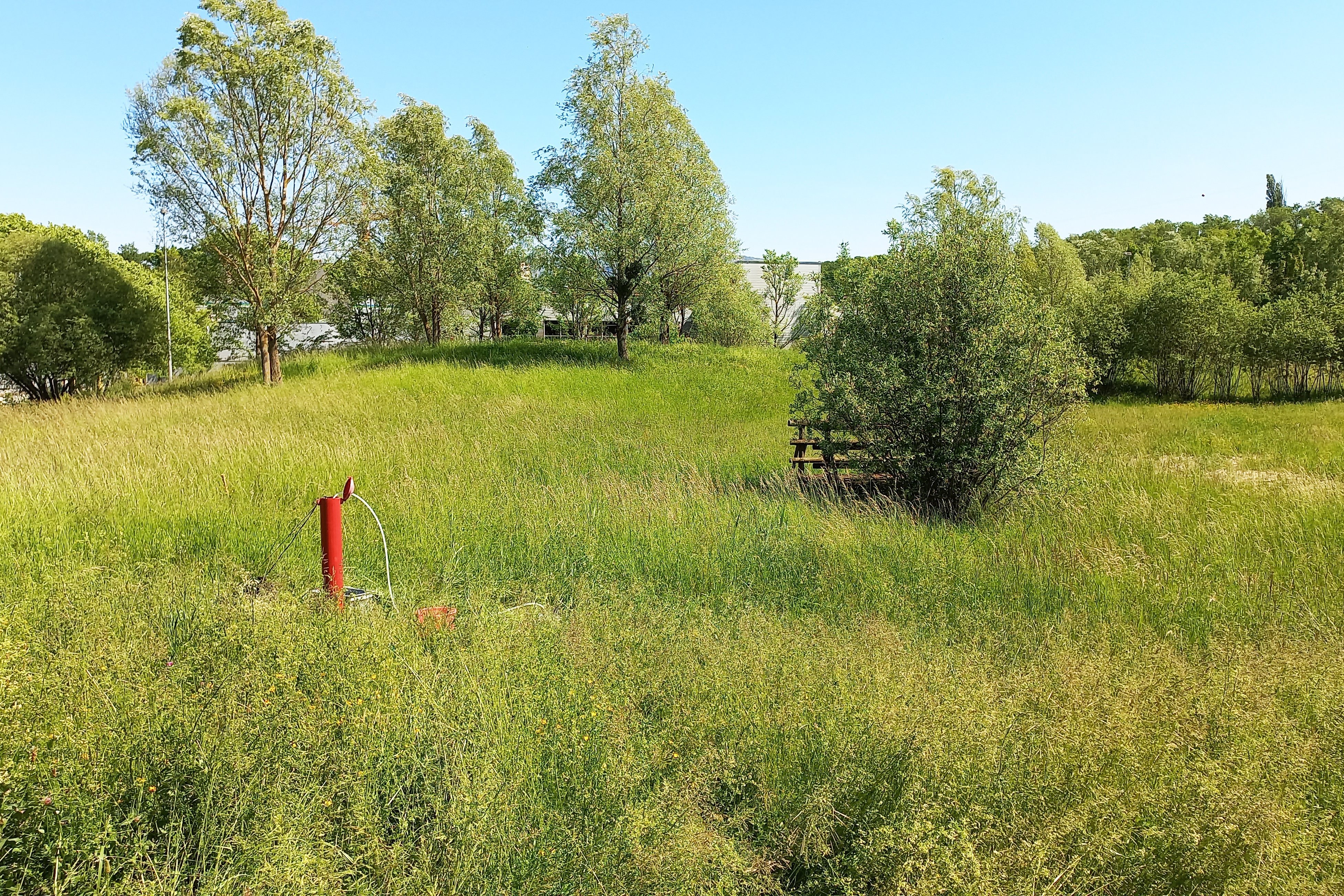
Until the 1970s, the Ritzer landfill on the outskirts of Küttigen was a garbage dump like many others in Switzerland. The municipality and the city of Aarau disposed of their household waste here, along with anything else that was no longer needed – including, at times, bicycles, clothes, and car parts. Later, FC Küttigen used the site as a football pitch, until it became clear in 2016 that, if the area was to be used safely in the long term, remediation of the contaminated site would be necessary.
The remediation is a project spanning generations. In technical terms, Ritzer is a “water-saturated landfill with gas generation.” The degassing process is not expected to be completed until around 2055. After that, the landfill is to be monitored for a further 30 years.
“I never would have expected these time frames,” says Stefan Renggli, head of civil engineering for the municipality of Küttigen. “If this site weren’t remediated, the landfill gases would continue to escape unchecked for another 200 years.” “Our remediation method accelerates the decomposition process in the landfill,” explains Niccolà Schaub, team leader for contaminated sites and environmental chemistry at Basler & Hofmann, “so that in just 30 to 40 years, hardly any methane gas should be escaping.” Thanks to the redevelopment, the land above the landfill will soon be ready for use as a sports field again.
Old waste site is remediated on site
“Some people in the village probably still think that we’re removing all the material from the landfill and disposing of it,” says Stefan Renggli. But the waste isn’t being hauled away. The 20-meter-thick layer of waste, consisting of approximately 300,000 m³ of municipal solid waste and excavated material, remains in the ground. The chosen method is in-situ redevelopment, or on-site redevelopment. To prevent any more harmful gases or wastewater from escaping, the landfill body is sealed all around, dewatered, and degassed.
Basler & Hofmann designed the remediation concept and is responsible for the overall management of the project planning and construction of the remediation facilities. Our experts in environmental chemistry, special civil engineering, fire and explosion protection, and plant and process engineering are working on the project. “The goal is to begin lowering the landfill leachate level and extracting landfill gases in early 2027,” says Niccolà Schaub.
In-situ redevelopment is more cost-effective than excavation
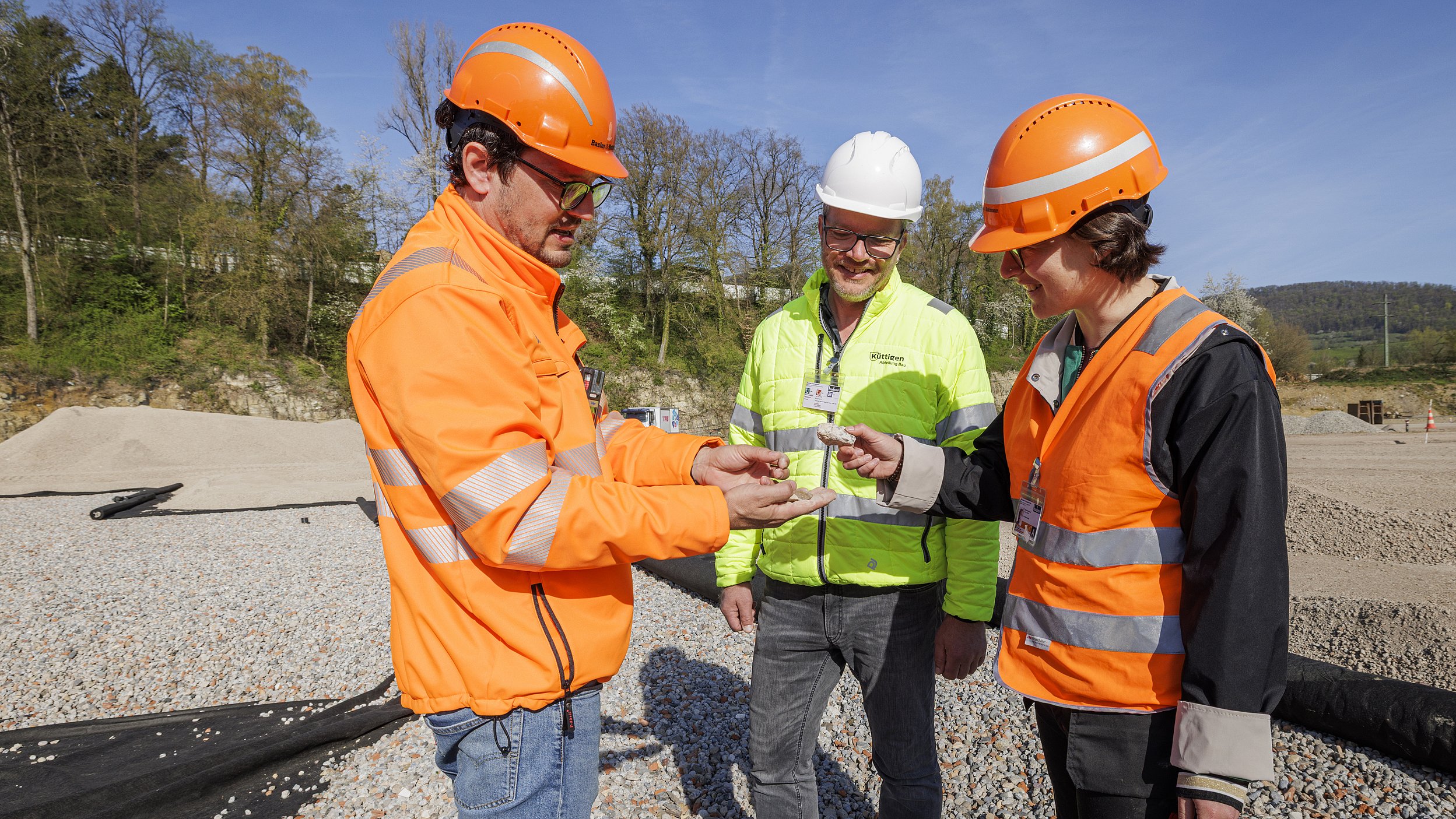
The in-situ redevelopment of the Ritzer landfill site will cost the federal government, the canton, the city of Aarau, and the municipality of Küttigen approximately 50 million Swiss francs. This method is significantly less expensive than excavation would be. “The excavation option would have cost about ten times as much,” reports Renggli. Excavating, transporting and disposing of the contaminated material at highly specialised facilities – usually abroad – would not only have incurred higher costs but also generated more emissions. For this reason, the municipality of Küttigen followed Basler & Hofmann’s recommendation and applied to the canton for “in-situ” redevelopment.
Sealing the Landfill and Preparing for Gas Drainage
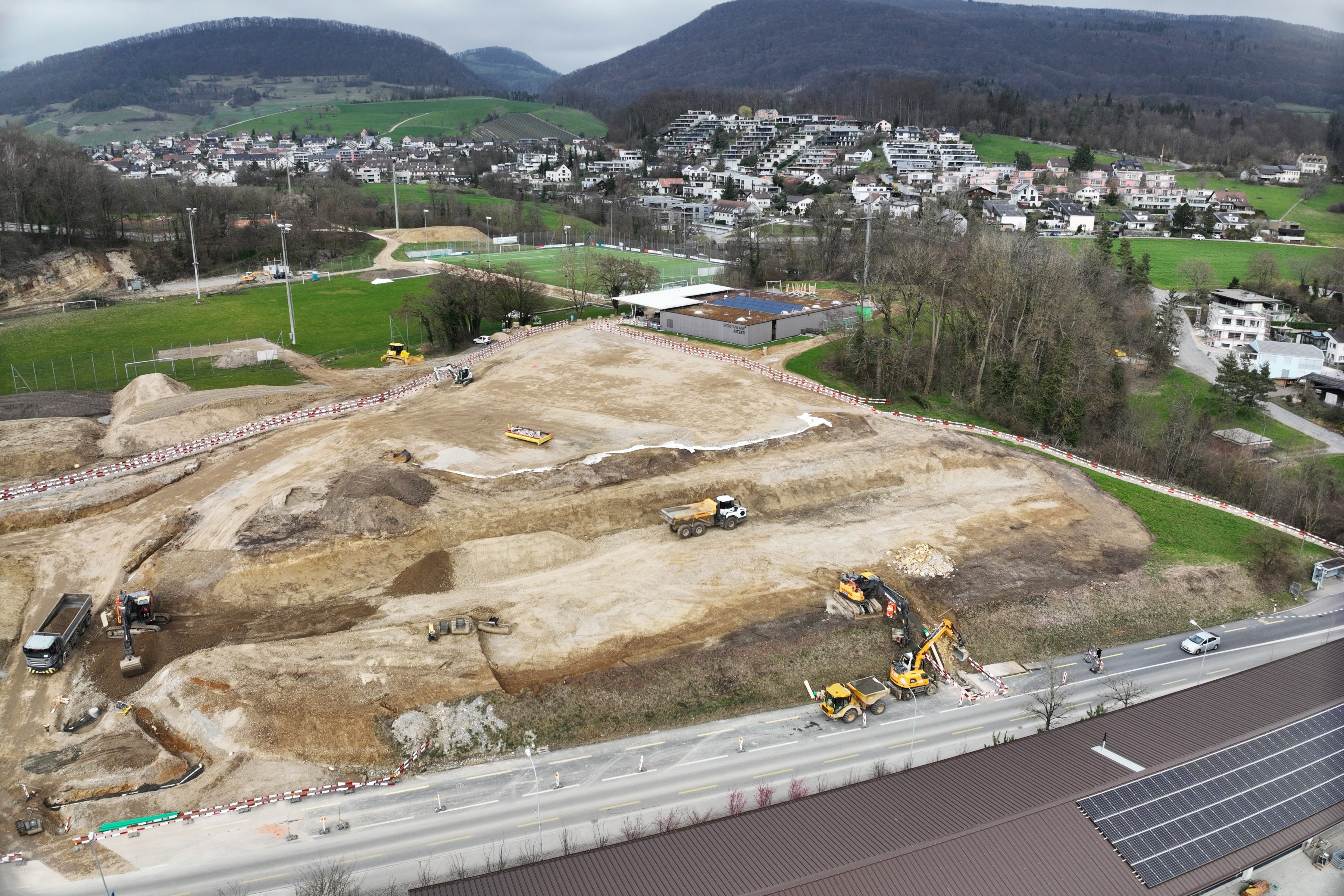
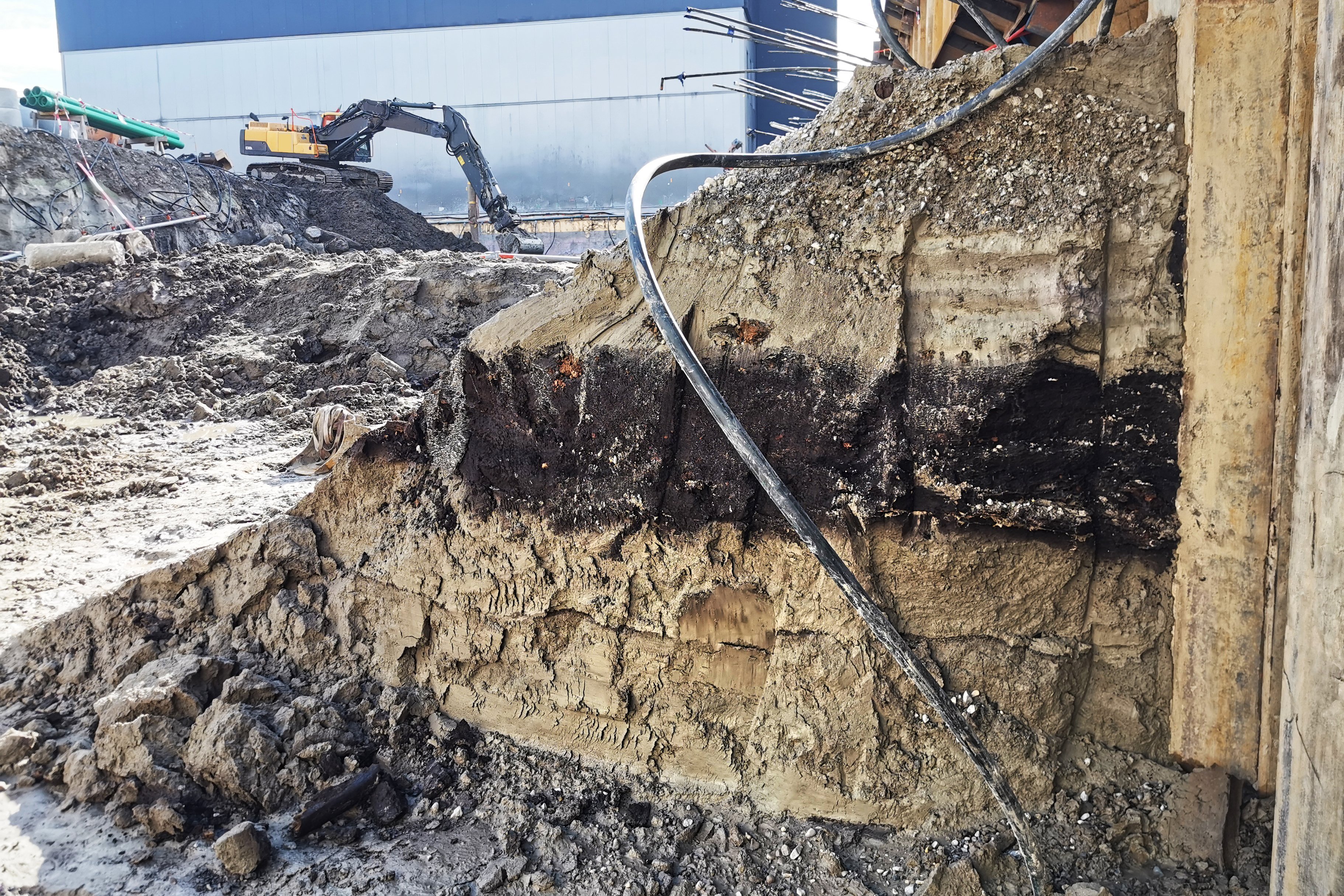
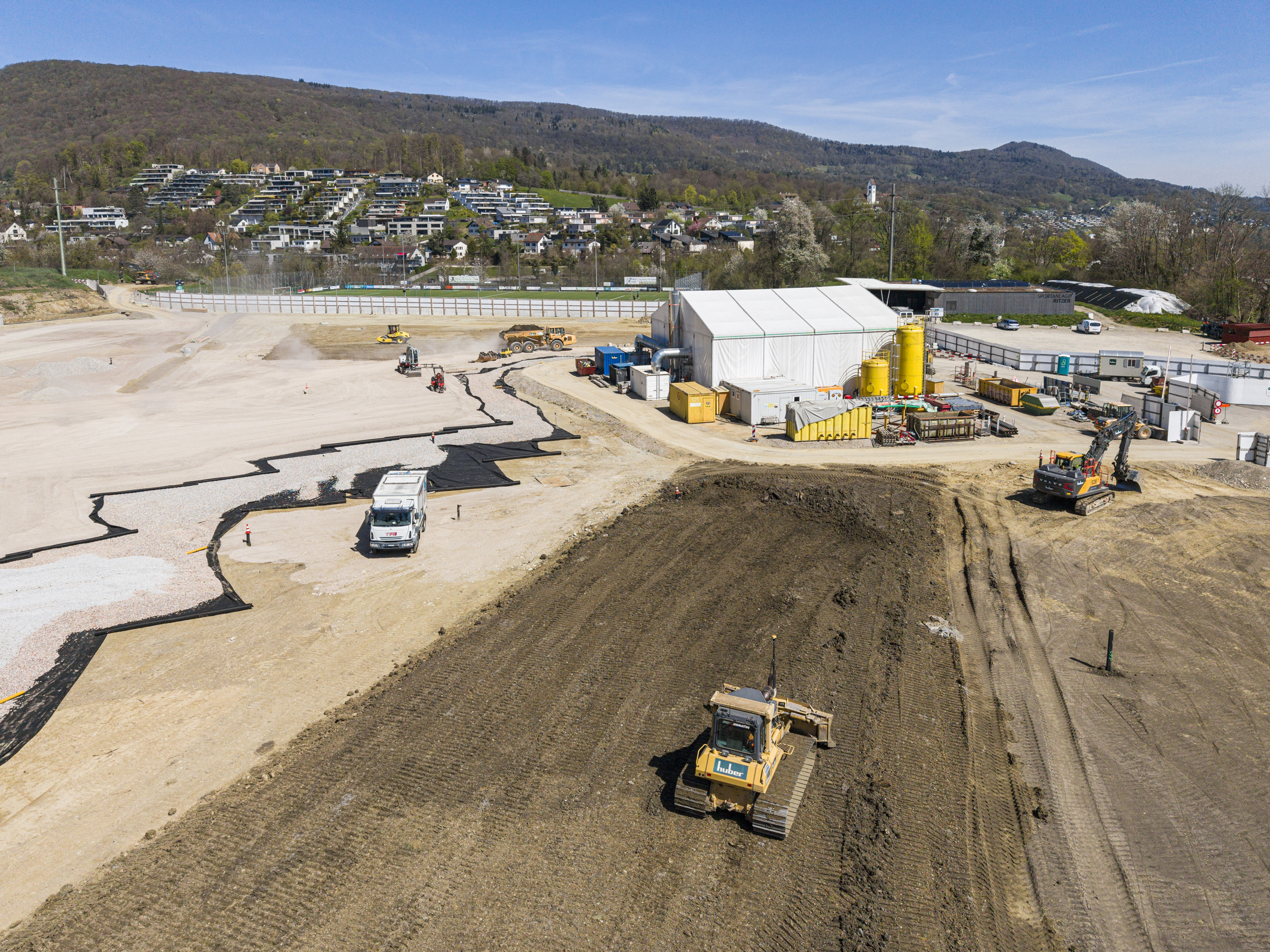
Construction work at the landfill has been underway since 2024. A sealing wall was built, and various soil layers were laid, separated by black geotextile.
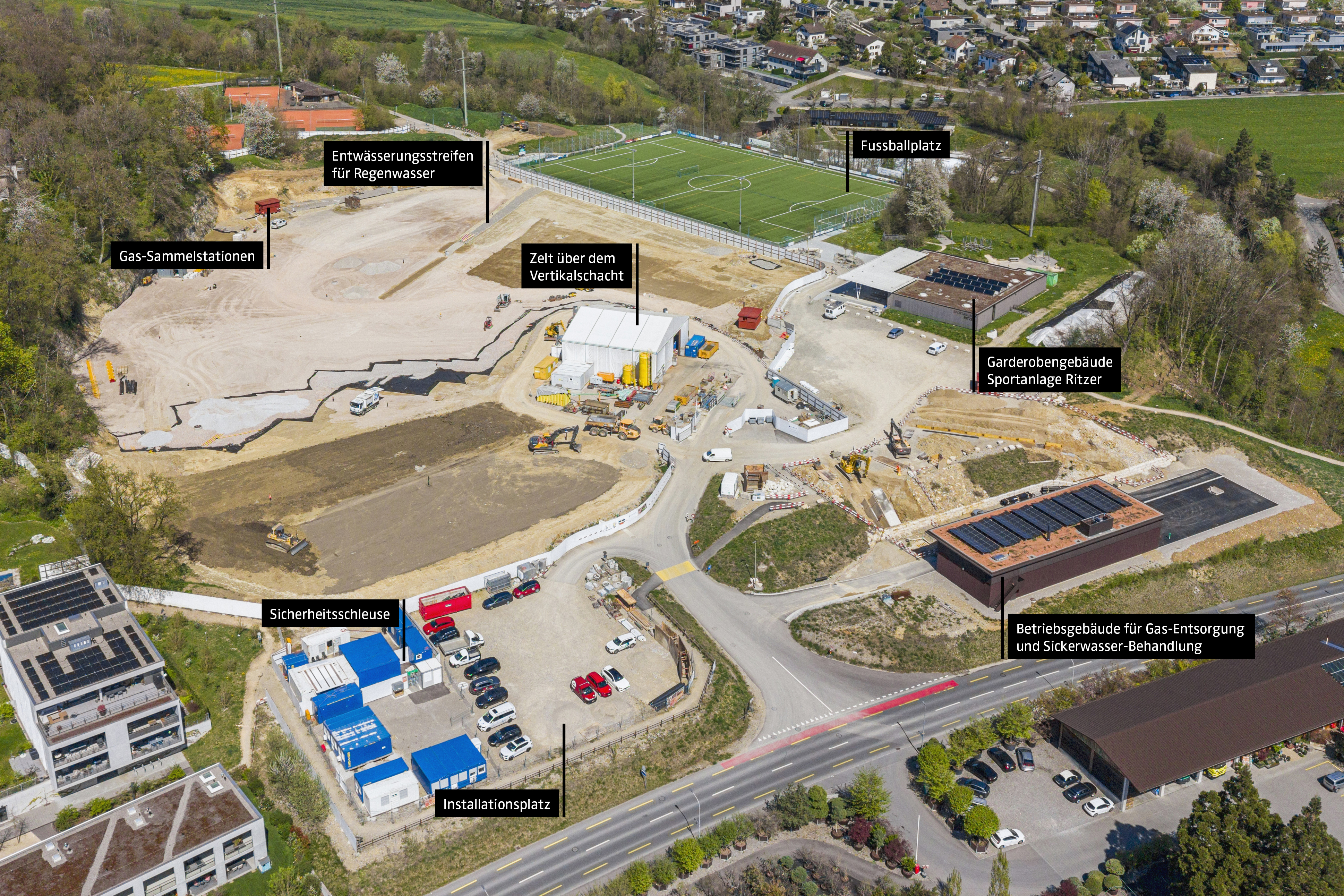
One of the layers consists of recycled mixed demolition aggregate; it will serve as a gas drainage layer in the future. The pipes within this layer will collect the landfill gas and direct it to a specially constructed treatment facility at the edge of the landfill. In the operations building there, the landfill gas, primarily methane, is converted into less harmful CO2.
In parallel with degassing, the decomposition of organic waste is accelerated within the landfill body. To achieve this, the water table must be lowered and air must be actively extracted from the landfill. As a result, the environment gradually changes from low-oxygen (anaerobic) to high-oxygen (aerobic). The goal is to improve the living conditions for the microorganisms active in the waste so that they break down the organic matter as quickly as possible.
In 30 to 40 years, they are expected to have largely mineralized the organic matter. What remains is mainly ‘dead’, inert material, and no significant quantities of landfill gas will be produced anymore.
Vertical shaft as the centerpiece of the drainage system
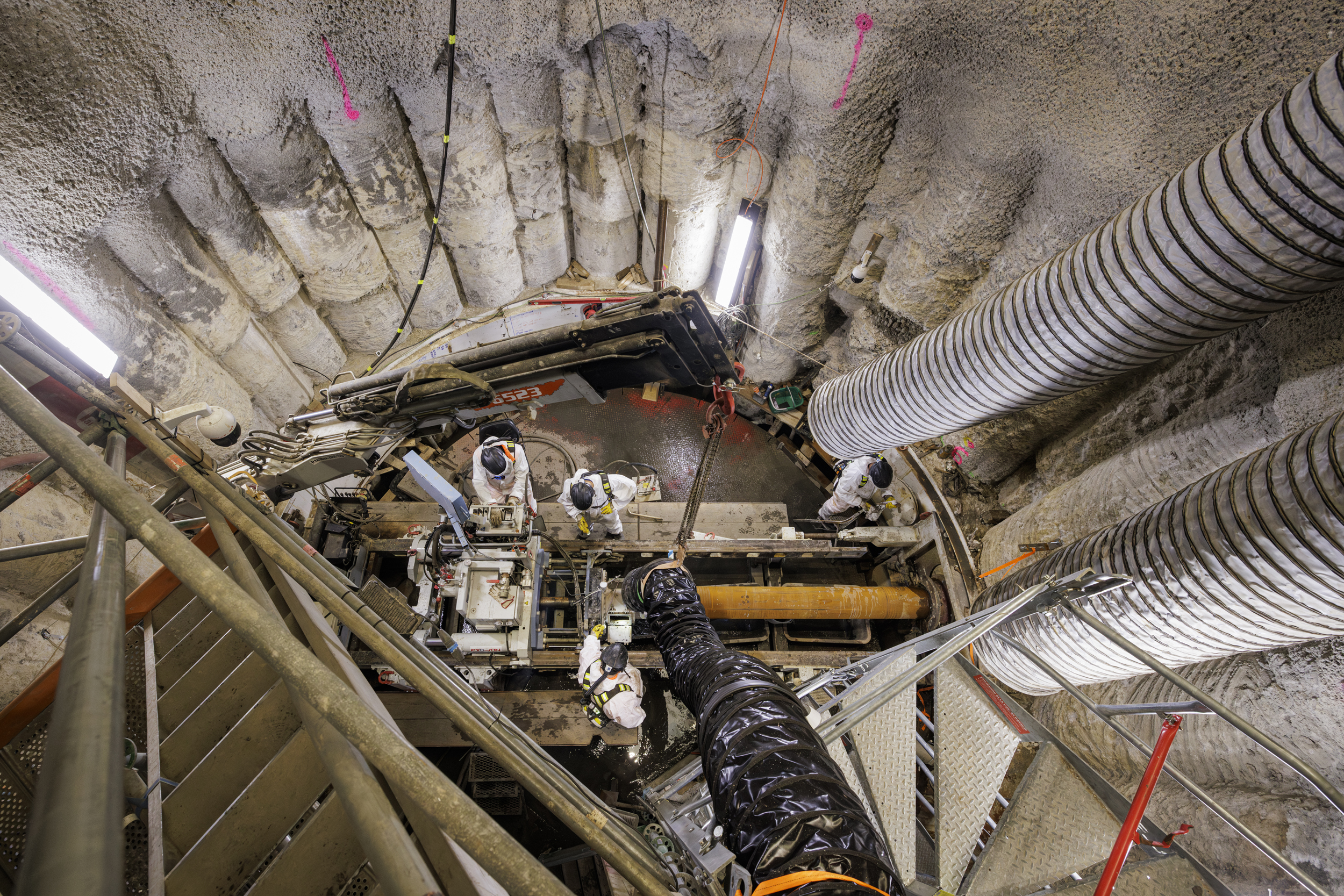
In April 2026, a white tent will stand on the landfill site. Inside it is the entrance to a deep shaft. The shaft has a diameter of seven meters and extends 25 meters deep into the landfill body. The vertical shaft is the centerpiece of the landfill’s drainage system.
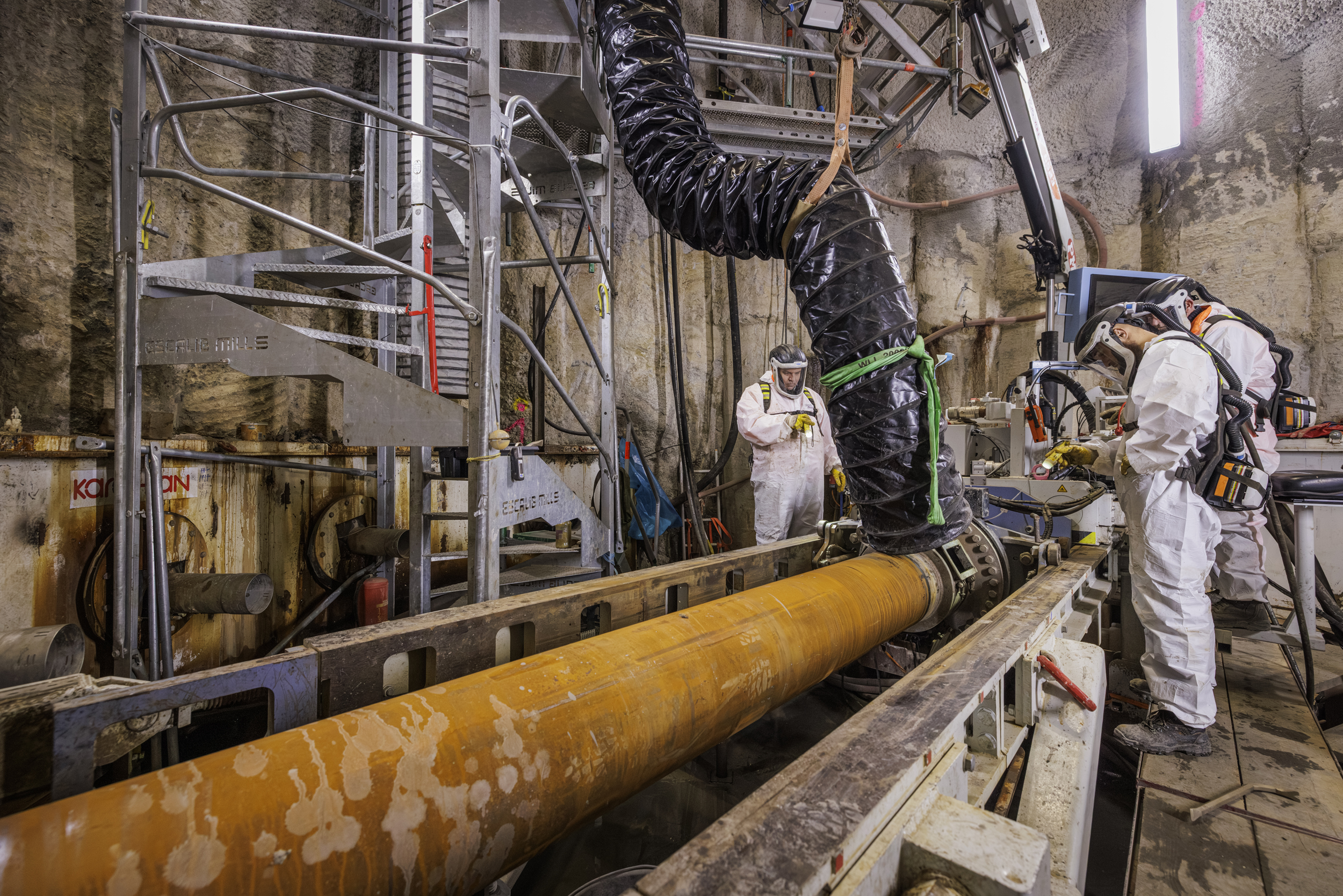
There is a rumbling and whooshing sound coming from the depths. Down in the vertical shaft, a drill is rattling away; ventilation pipes are extracting contaminated air, while construction workers in protective suits and respirators are hard at work.
They are drilling six 100-meter-long channels in a star pattern and horizontally into the waste pile. Pipes for the landfill’s drainage system are being laid into these six “horizontal wells.” Their purpose is to collect and divert the leachate that has accumulated in the landfill. “No one knows exactly what’s in the landfill,” says Niccolà Schaub. That’s why occupational safety and health are particularly important when dealing with contaminated sites.
The gas is rendered harmless in the operations building
The operations building on the edge of the landfill houses the technical facilities for degassing and leachate treatment. Starting in 2027, all potentially harmful substances will be eliminated here. Adrian Wildhaber, project manager for process engineering at Basler & Hofmann, designed the facilities.
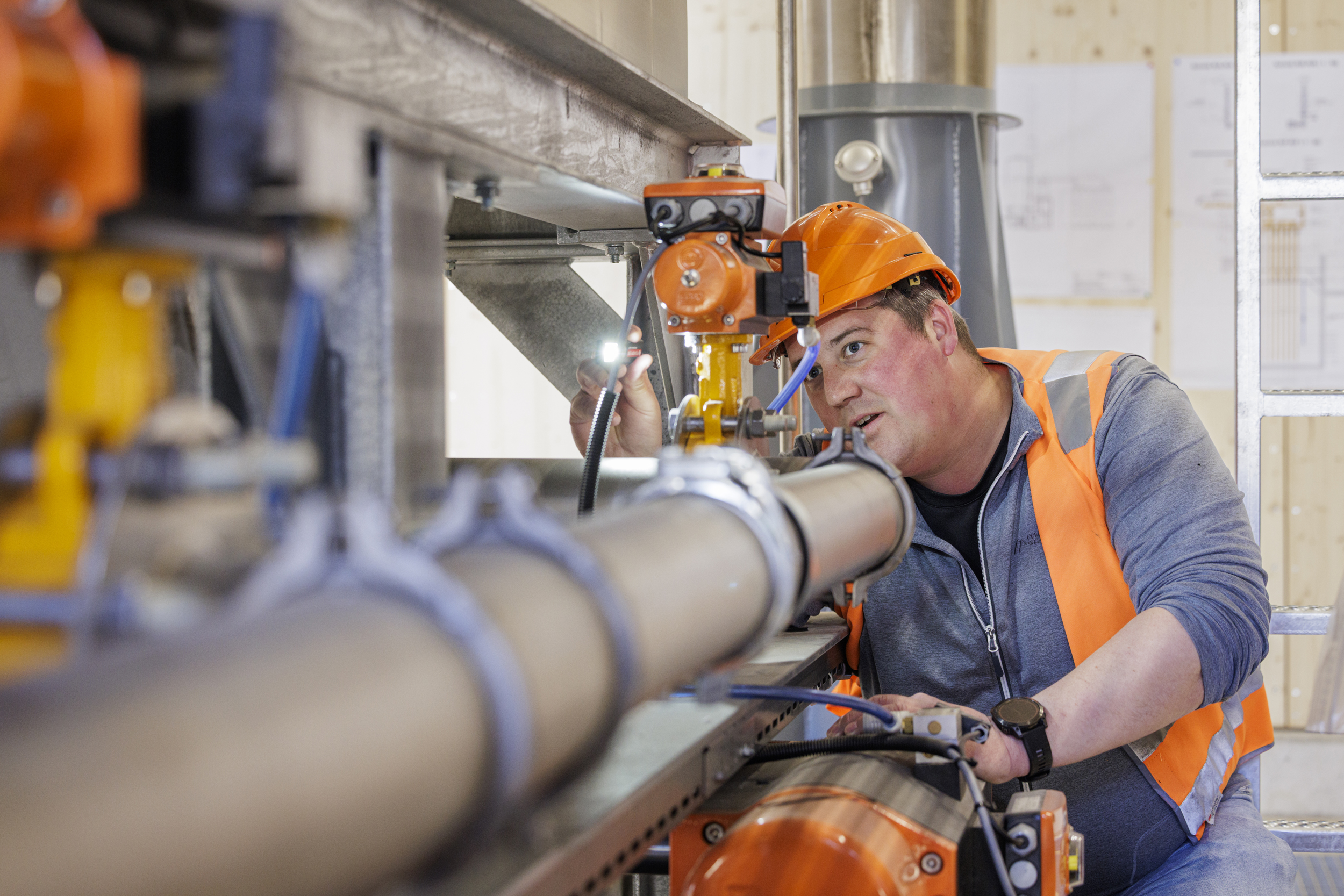
Once the combustion chambers begin operating in 2027, the methane (CH4) inside them will be heated to an oxidation temperature of up to 950 degrees Celsius using electric spark plugs and converted into carbon dioxide (CO2). TheCO2, which poses no health risk, is then released into the air through a stack. This degassing process is expected to continue until 2060.
Links:
- The municipality is documenting construction progress here.
- Project: Redevelopment of the Ritzer Landfill Contaminated Site, Küttigen