"Organisational measures for fire safety are crucial on building sites"



Construction sites pose a significant fire risk. Our experts, Matthias Wegmann and Jakob Studhalter, share some of the dangerous situations they’ve encountered. Yet fire engineering on construction sites doesn’t have to be complicated or expensive. Often, even simple organizational measures can make a big difference.
At Basler & Hofmann, Matthias Wegmann and Jakob Studhalter advise public and private building owners on fire engineering. They develop fire engineering concepts for new construction projects and also provide guidance for complex renovations and repairs. In doing so, they focus on a risk-based, proportionate, and needs-based approach to fire engineering.
When the fire broke out at Notre-Dame de Paris Cathedral in 2019, renovation work was underway. The Old Stock Exchange in Copenhagen also caught fire during a construction phase. Is the fire risk on construction sites underestimated?
Matthias Wegmann: Definitely yes. Major, devastating fires often occur during construction – that is, when the safety measures for the building’s future operation have not yet been implemented. Fire engineering is often neglected during construction, even though the fire risk is highest during the construction phase. Fire engineering on construction sites is generally poorer than in the finished building.
How common are fires on construction sites in Switzerland?
Jakob Studhalter: More often than you might think. According to the Association of Cantonal Fire Insurers (VKF), there is at least one fire on a construction site in Switzerland every day. And the most significant property damage caused by fires often occurs during the construction phase.
Why are there sometimes shortcomings in fire safety on building sites?
Matthias: Fire safety plans often focus primarily on technical and structural measures. On a construction site, however, organizational measures are particularly important for fire engineering. For example, keeping the site tidy and ensuring no flammable objects are left lying around. Organizational aspects depend on people, and there’s still room for improvement there. Often, simply cleaning up would help.
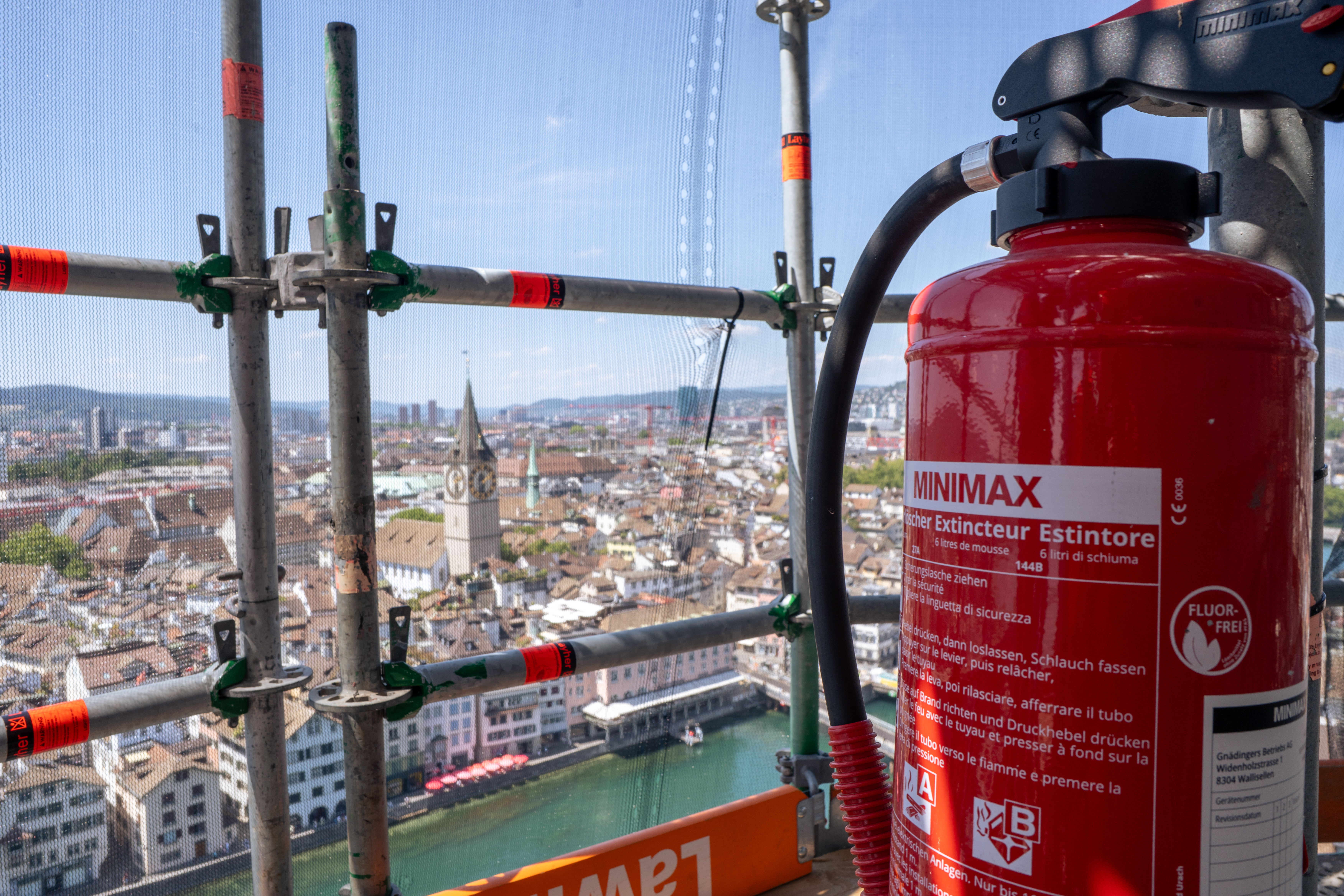
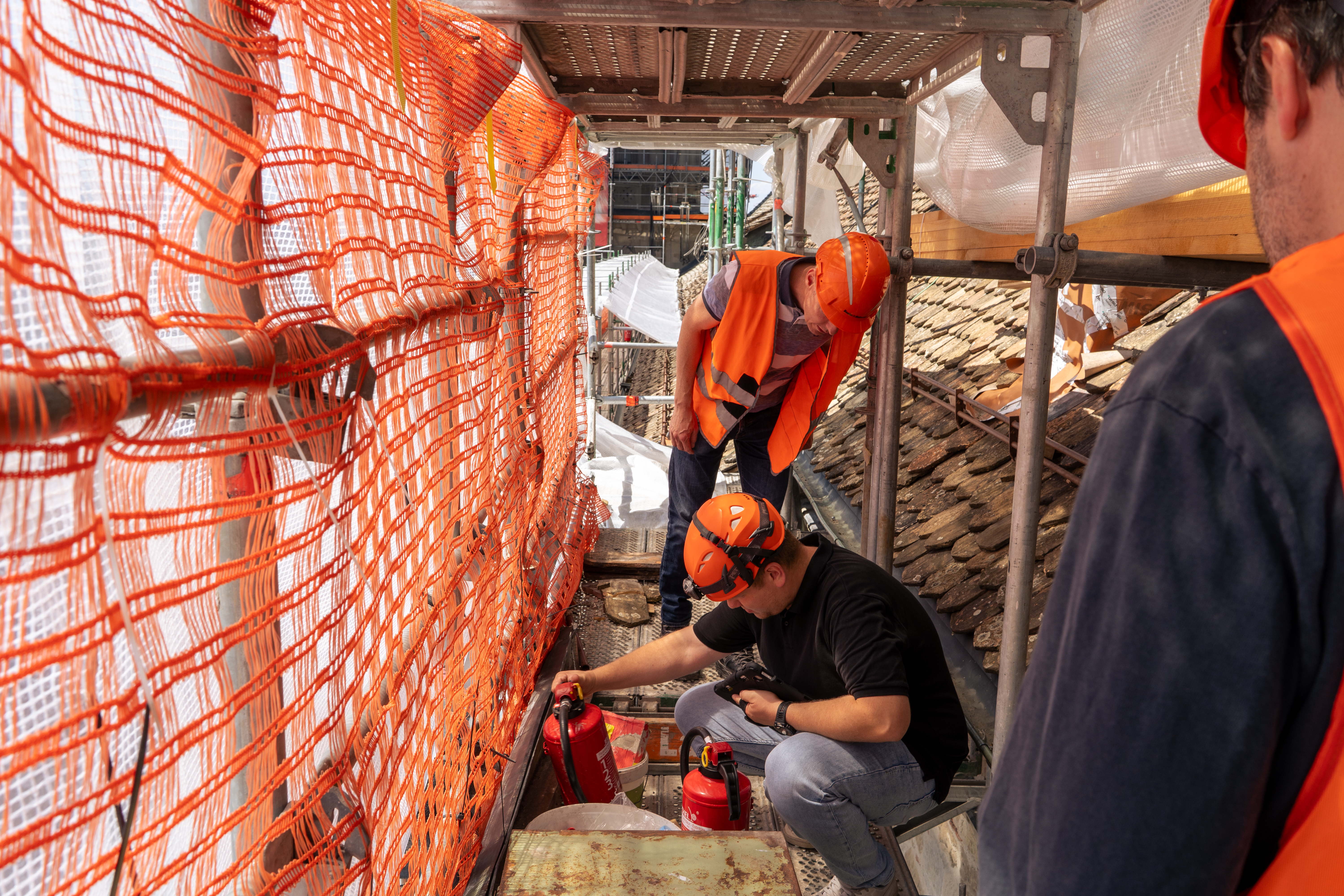
Jakob: It’s the exception rather than the rule that fire engineering is as well-organized as it currently is at the Grossmünster construction site in Zurich. At Grossmünster, the level of craftsmanship and attention to detail is high. On many other construction sites, we’ve seen quite the opposite. Time pressure is often so great that fire engineering becomes the lowest priority. People just leave the wedge under the fire door where it is, don’t want to waste time moving fire extinguishers, and don’t want to leave the construction site to smoke.
What dangerous situations have you encountered on construction sites?
Jakob: I’m thinking of a construction site in a shopping center where a lot was in disarray: The fire alarm system was turned off. At the same time, people were smoking on the site even though there was a strict no-smoking policy in place. And it was a complete mess; escape routes were blocked and obstructed by materials. The fire department would have had difficulty reaching the source of a fire. As a fire safety specialist, I brought this to the attention of those responsible and suggested measures to correct these deficiencies.
What are typical causes of fires on construction sites?
Matthias: Hot work is a risk factor: tasks such as welding, soldering, or the use of gas torches to weld bitumen. This can lead to flying sparks or, later, smoldering fires. Other typical causes of fires on construction sites include smoking and electrical short circuits.
Jakob: Rechargeable batteries have become an increasingly common source of danger on construction sites. In the past, corded tools were more commonly used; today, cordless tools such as drills and screwdrivers are the norm. Fires can result from damage to the batteries, the use of incompatible chargers, or overheating while charging damaged batteries. Internal short circuits in rechargeable batteries can trigger thermal runaway – an uncontrollable chain reaction in which more and more heat is generated until the battery catches fire or explodes. Batteries should always be charged in a non-flammable environment – not next to a bucket of highly flammable paint.
Are building owners aware of these risks on construction sites?
Matthias: Not all of them. For many building owners, however, fire engineering is simply a low priority. Fire engineering is burdened by the misconception that it costs a lot of money, restricts freedom, and involves burdensome regulations.
Jakob: During the construction phase, it’s also important to note that it’s not the building owners or operators who are responsible for fire engineering, but rather the construction companies and site supervision. This responsibility is delegated by contract. Construction companies are often under significant cost and time pressure, which doesn’t promote fire engineering. At the same time, they have a vested interest in preventing fires on the construction site. The bottom line is simply this: there are construction sites where fire engineering is taken seriously, and others where there is room for improvement.
How do you help building owners improve fire engineering on construction sites?
Jakob: We address the issue of fire safety on building sites in each of our fire engineering plans. It’s simply part of the process. We propose adequate, site-specific fire engineering measures, including for the construction phase. For a simpler project, such as a block of flats, it’s often enough to communicate the most important rules and responsibilities.
Matthias: The construction site fire safety plan doesn’t normally make construction more expensive. Fire safety doesn’t have to be expensive: it’s often enough to discuss the most important principles with the site supervision team. Keeping things organized isn’t expensive either. Fire extinguishing agents or fire barriers can be reused multiple times; they don’t have to be replaced over and over again.
If there is a need for additional measures and we can justify them, the building owners are often grateful and willing to cover the extra costs, such as for temporary fire walls.
What simple measures on construction sites are particularly effective?
Matthias: Keep things tidy. Don’t leave trash lying around. Doors and stairwells must not be blocked with flammable building materials. Escape routes must be kept clear at all times.
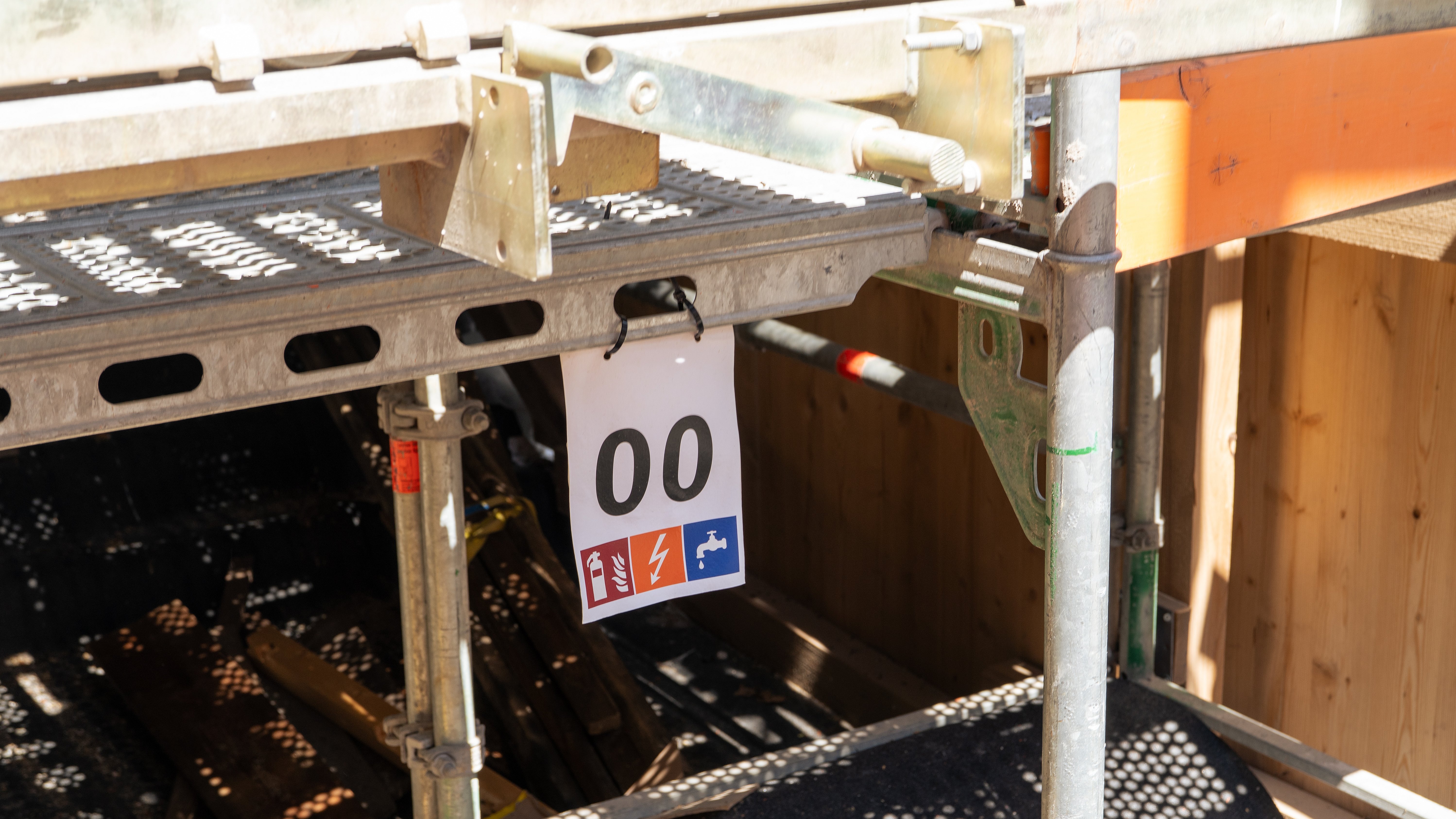
Jakob: It’s also important to keep access routes clear for the fire department: vehicles and equipment must not be parked in the wrong places. Of course, there must be a smoking ban on the construction site as soon as the structural works are complete. When performing hot work, safety precautions must be taken – for example, adhering to specific time windows and ensuring that nothing is still smoldering. Firefighting water must be available within a reasonable distance in case something goes wrong.
What is your basic philosophy regarding fire engineering?
Jakob: Fire engineering must be tailored to specific needs. It’s not about rigidly adhering to guidelines, but rather about finding site-specific and appropriate measures that achieve the actual goal: fire engineering, especially the protection of people.
One might conclude from the Crans Montana disaster that more regulations and inspections are needed in fire engineering. What’s your take on that?
Matthias: New regulations or more inspections don’t necessarily lead to greater Safety and Security. What’s needed is control over the key risks. More inspections can even be counterproductive because they can lead property owners to take their responsibilities less seriously. In my view, what matters isn’t having as many regulations and inspections as possible, but having the right ones. First and foremost, understanding the problem is key. Fire engineering is only effective if the key risks of the property have been identified and solutions for them have been found and implemented. Simply complying with standards and regulations is often not sufficient. This is particularly true for renovations carried out during ongoing operation or for historic buildings. Such complex projects require a customized, risk-based fire engineering strategy.
Are Swiss standards not sufficiently geared toward renovations?
Matthias: Standards address typical problems and, in the construction industry, are geared toward new construction. But renovations—especially the repair of historic buildings or specialized structures like industrial facilities or logistics buildings—present fire risks that differ from standard risks. These require customized solutions.
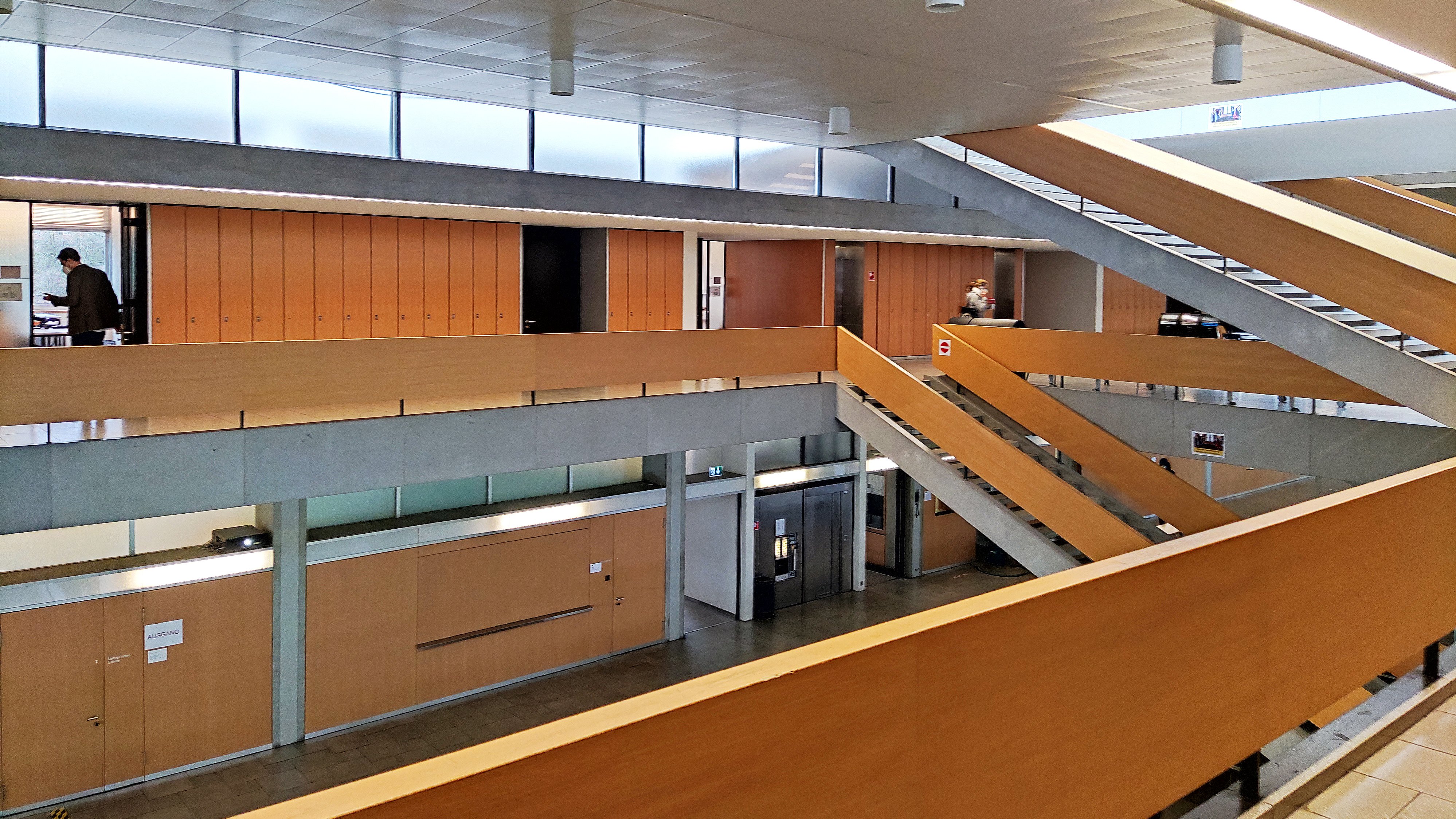
Jakob: Take older school buildings, for example. In the past, school buildings were often designed with an atrium featuring a staircase in the center of the building (see image). According to today’s fire safety standards, this does not qualify as an emergency staircase, which is why external staircases are often added. But it’s a shame to add external staircases to historically significant buildings if a risk-based assessment can demonstrate that older stairwells that deviate from current standards can indeed serve as escape routes. Measures other than an external staircase might even be more effective in such buildings. These are problems that we analyze and solve using a risk-based approach. In fire engineering plans, we then demonstrate how the goal of fire engineering can be achieved, if necessary, through alternative measures.
Why is fire engineering more challenging for renovations and repairs than for new construction?
Matthias: With renovations, the existing structure is often less well understood—you’re more likely to encounter surprises. That’s because with older buildings, it’s often unclear or not documented anywhere how the walls and ceilings are constructed.
Jakob: Additionally, building operations often continue during renovations, as is currently the case with the Grossmünster in Zurich, which remains open for church services, events, and tourism throughout the construction period. The fire risk is higher on construction sites with an ongoing operation. In addition, repair projects tend to involve more hot work than new construction projects.