Almost there: Sophie and Michael look back on their vocational training



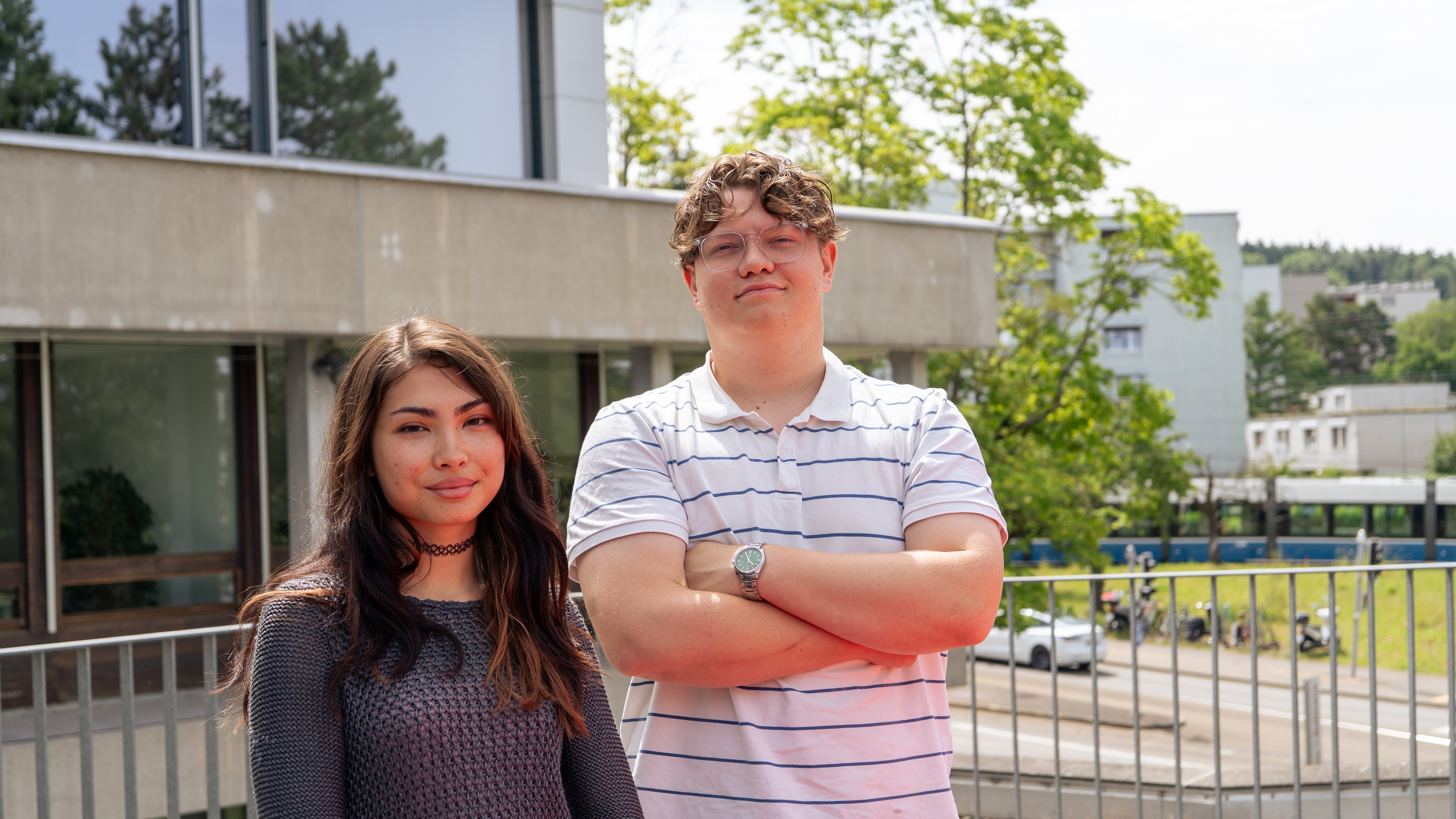
Sophie Schönsee is about to complete her vocational diploma and her apprenticeship as a civil engineering drafter (EFZ), while Michael Sieber is almost ready to receive his completion as a geomatics technician (EFZ). In this interview, they explain why they chose these professions, what their apprenticeship at Basler & Hofmann has been like, and where they see themselves in the future.
Basler & Hofmann is currently training civil engineering drafters and Geomatics technicians in Lucerne and Zurich (see: Careers). They are supported throughout their apprenticeships by vocational and on-the-job trainers. We asked Sophie and Michael, shortly before the completion of their training, how they found their apprenticeship with us.
Michael and Sophie, how are you doing so close to finishing your apprenticeships?
Michael: Good . I’ve already completed the IPA exam - the Individual Practical Work—and almost all the written exams for the qualification process. Now I just have the general education exam left. Everything went well; I’m expecting to hear soon that I’ve passed.
Sophie: I’m pursuing the vocational baccalaureate in design, and those exams are almost over. The exams for the qualification process to complete my apprenticeship will follow at the end of June. It’s a stressful time right now; I’m studying every day.
Do you remember the day you were accepted into the apprenticeship program?
Michael: That was a defining moment in my life. I knew that a new chapter was beginning and that I was joining a team. I received the offer shortly after my interview at Basler & Hofmann. Rolf Kaufmann, the geomatics project manager, called me that very evening to let me know.
Sophie: For me, it was super exciting. The interview went smoothly, I had a good feeling about it, and I quickly received an offer from vocational trainer Paul Ludwig. When I started the apprenticeship, I was only 14 years old. That’s because I had completed part of my compulsory schooling abroad, so I was younger than other first-year apprentices.
Why did you choose apprenticeships as a drafting technician and a geomatics technician, respectively?
Sophie: My father is a civil engineer. I knew early on what he did for a living, and I found it fascinating. I’m good at analytical thinking, and I’ve always loved drawing. So I did trial days as a draftsman at various operations. I only applied to Basler & Hofmann.
Michael: I chose the Geomatics apprenticeship because of the variety. I didn’t want a job where I’d just sit in an office, so I looked into which professions also involve working outdoors. Then I did trial days as a geomatics technician at various companies. I found surveying in civil engineering more exciting than public surveying. So I applied to Basler & Hofmann and received an offer in 2021.
What do you like best about your job?
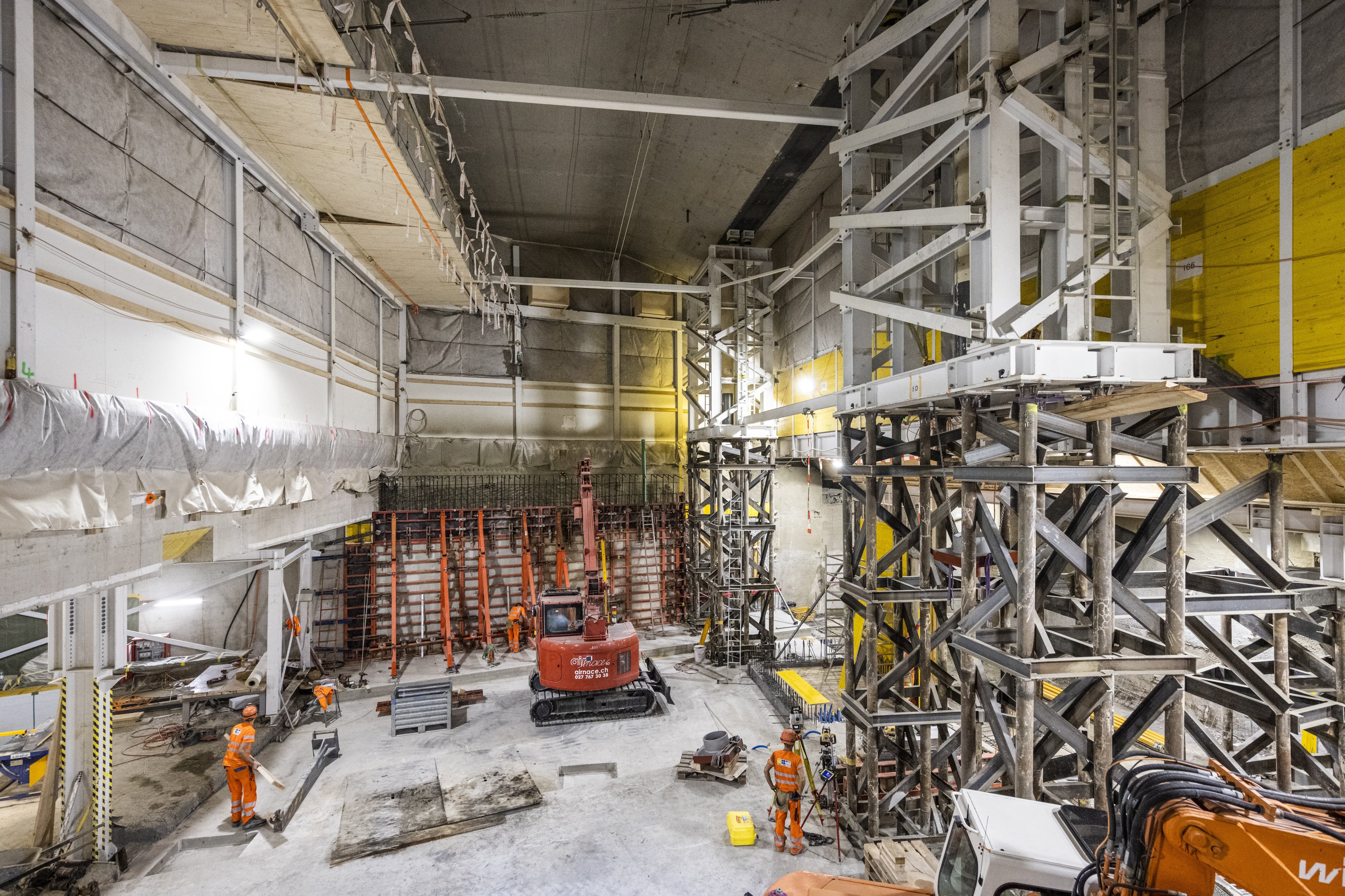
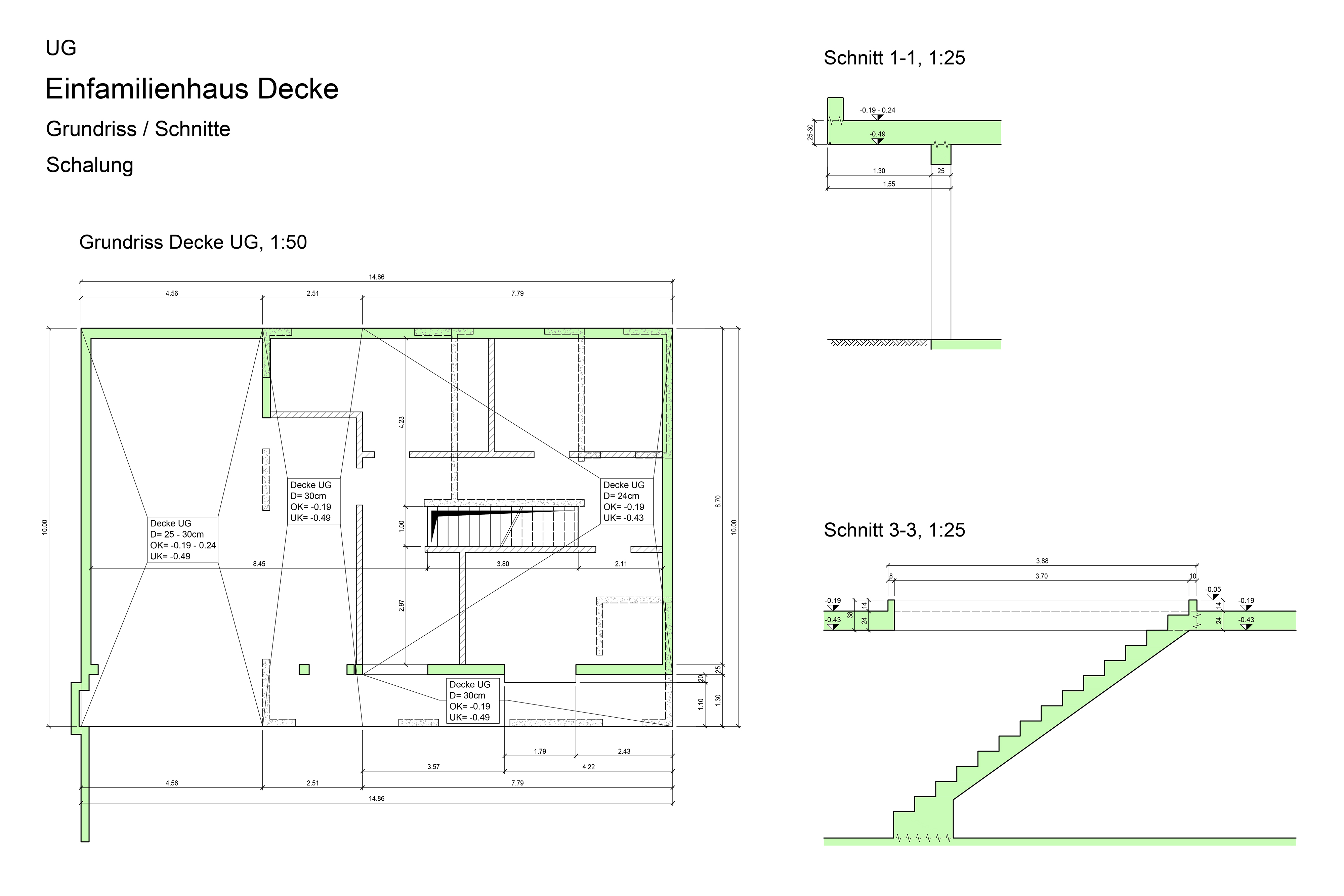
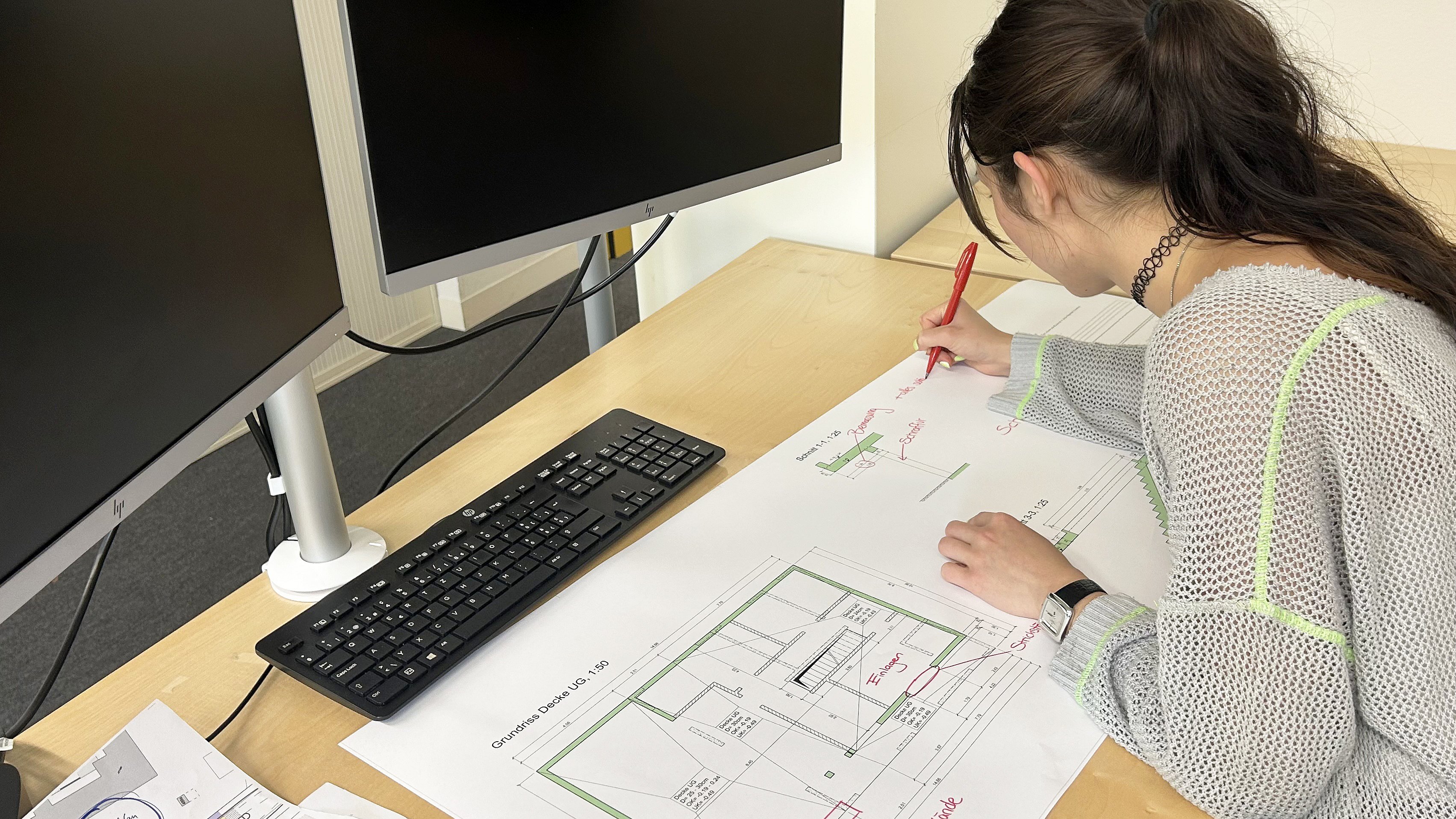
Sophie: I draw plans that are then used to build or renovate roads, service pipes, or buildings. What I like best is modeling - that is, creating 3D models, such as service pipes. It’s more challenging than just drawing lines. In service pipe 3D models, you work with coordinates and numbers in a database. The best feeling is seeing a project you helped with being implemented out on the construction site.
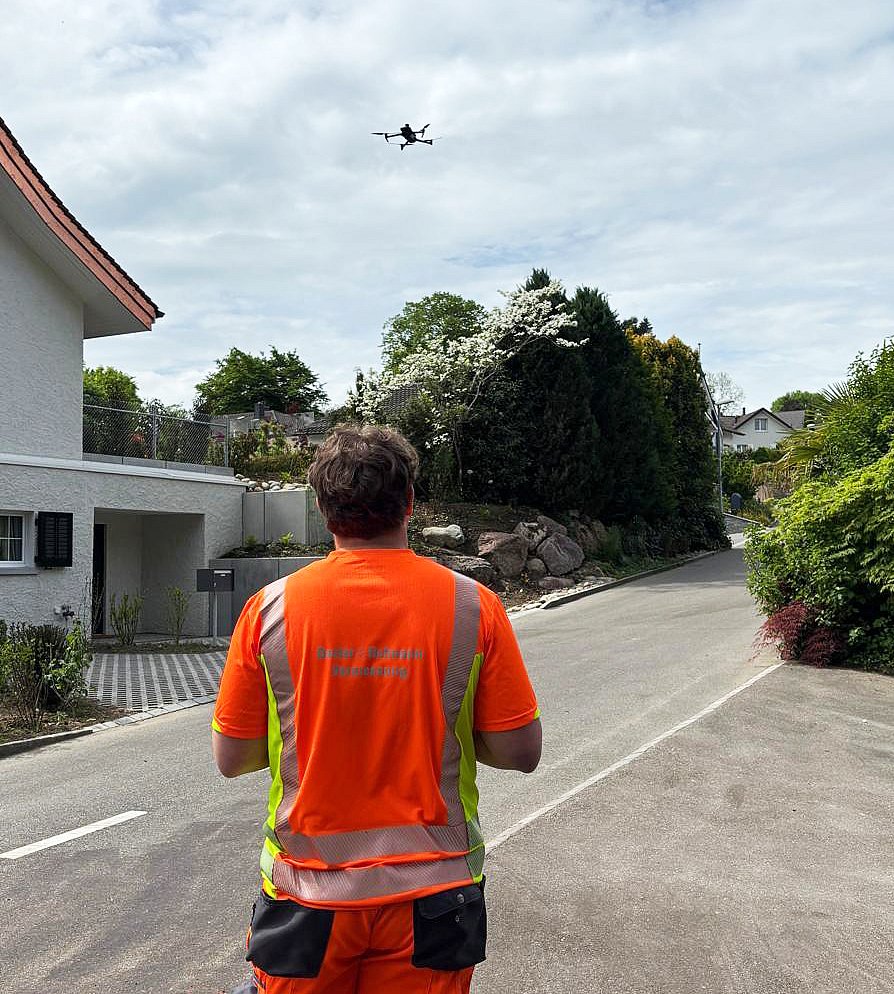
Michael: I’m the one standing out on the street in orange work clothes, and many people think: That’s a guy with a speed camera. But I’m a geomatics technician; I measure roads, houses, and sites. I prefer to work with drones to create orthophotos, for example, for a site survey. We fly over roofs or building facades, for instance. Those aren’t easy to measure from the ground. We then use software to create 3D models from the photos for our clients.
What was your experience with the apprenticeship like?
Michael: The four years of the apprenticeship were very enjoyable. There were also stressful times, for example before project deadlines or before the drone exam. It was particularly challenging once when I had to fill in for a colleague for a while, he was the only other person besides me who could fly a certain type of drone. I had to handle all the planning myself, obtain all the necessary permits, analyze and model the data, and even submit the final work to the client.
Sophie: My interests broadened over the course of the apprenticeship. I realized that design is closer to my heart than construction. I also discovered new hobbies, such as mixed martial arts (MMA), as well as philosophical topics related to perception, consciousness, and the question of what lies beyond our immediately perceptible world. As a draftsman in civil engineering, I’m now good at what I do. Still, I want to continue my education to study philosophy. For my minor, I’d like to choose something practical that complements my career prospects.
That brings us to the future. What will you do once you have your EFZ certificate?
Michael: Celebrate! First at the graduation ceremony, and then I’ll go out for a drink with my colleagues. In the summer, I’m taking a little break and going to France to surf. After that, I’d like to continue working at Balser & Hofmann, and then complete basic military training. Maybe I’ll even pursue training to become a career soldier.
Sophie: I’ll celebrate first, too, then travel to Indonesia, where part of my family lives. I’m really looking forward to this break. After that, I’ll work for a year as a draftsman at Basler & Hofmann, then earn my high school diploma at the Cantonal High School for Adults, and then go to college. That’s the path I want to take right now.
When you look back on your apprenticeship in ten years: What will you remember?
Sophie: Mr. Grob! My vocational school teacher. He teaches planning and math and is the best teacher ever. He’s a cool guy, takes time for us students, and explains things really well. I also enjoyed the four-week construction site internship. It was impressive to witness over a longer period of time how the plans I drew were put into practice. How an idea is transformed into reality.
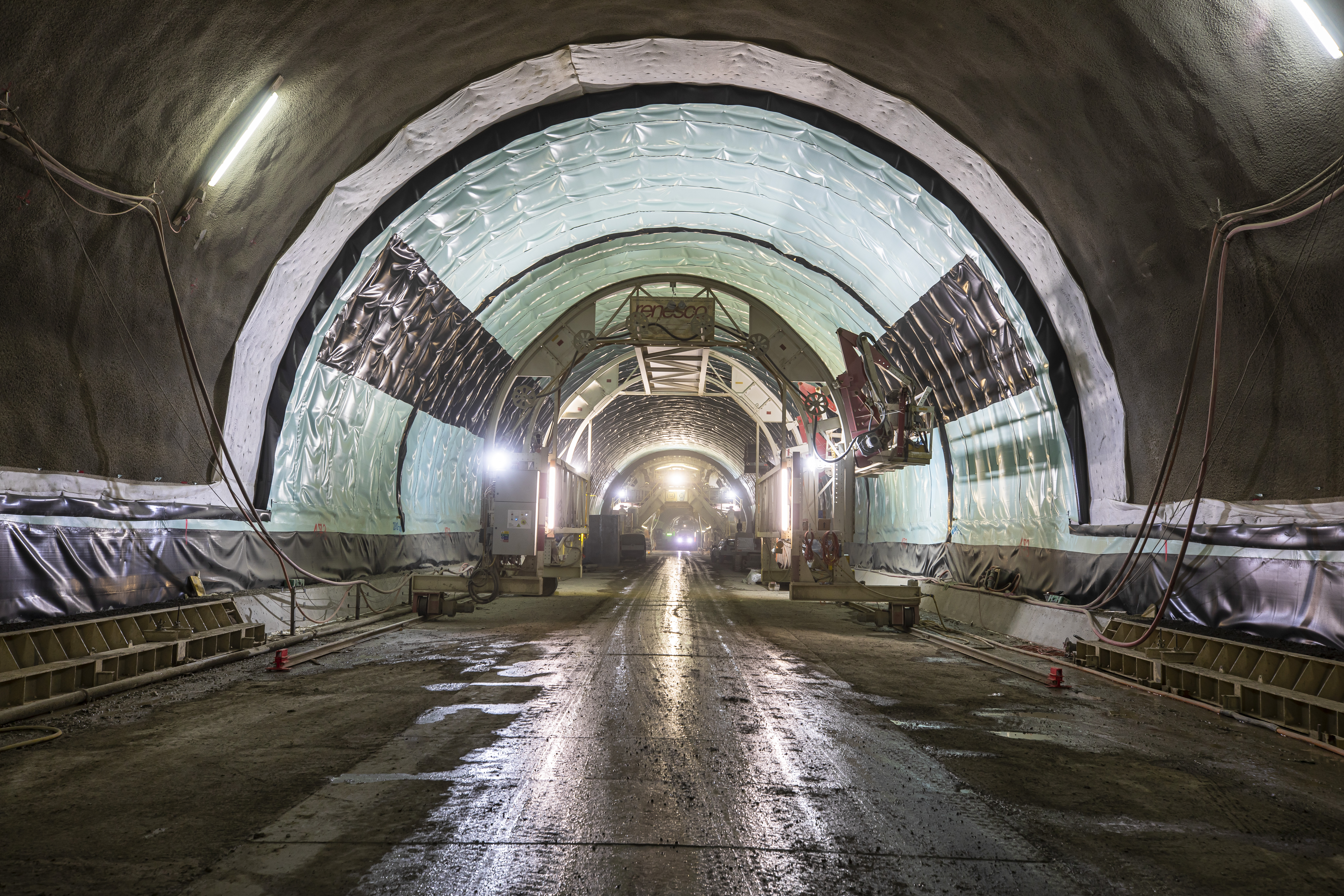
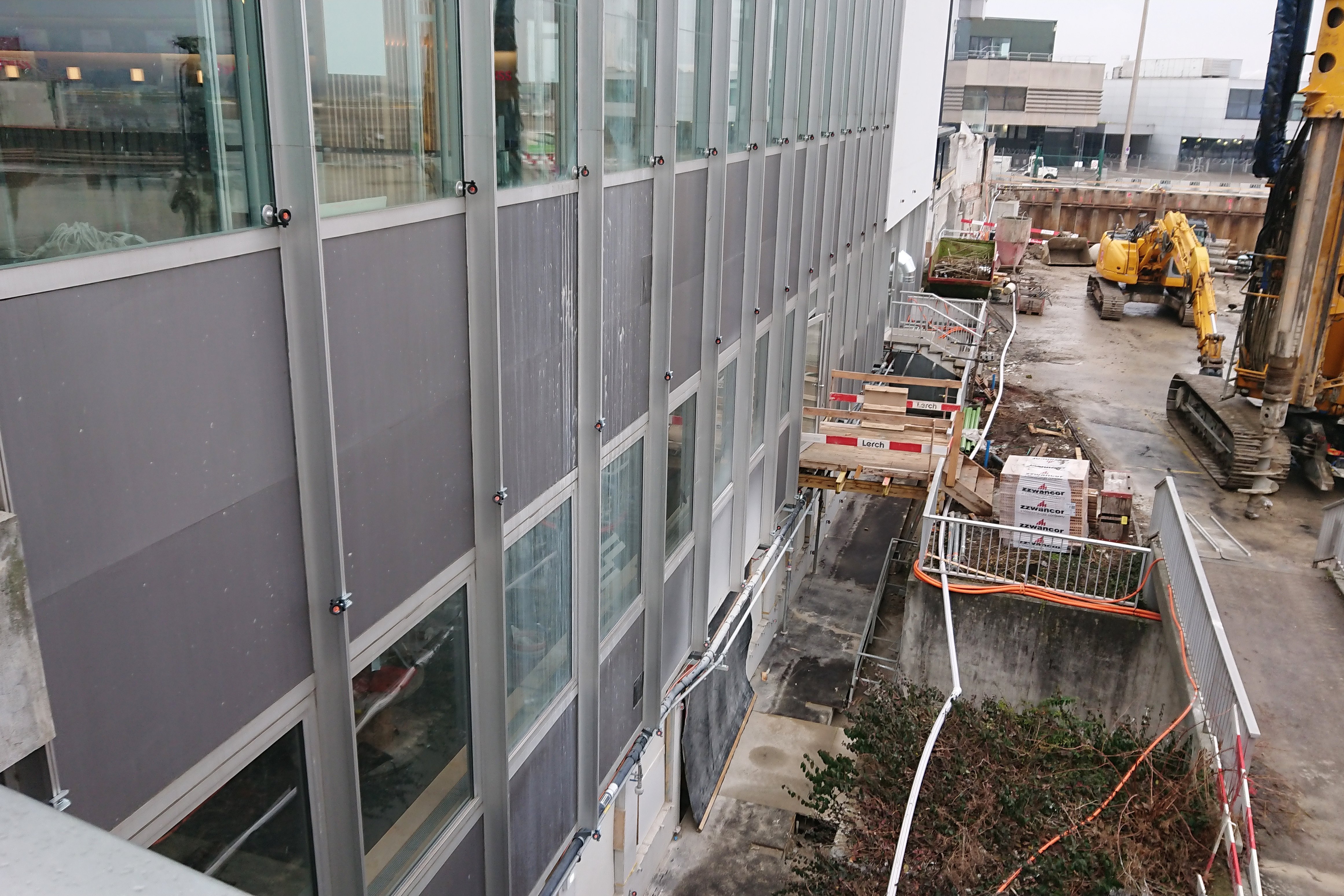
Michael: I’m sure I’ll remember specific projects. When I drive through the Gubrist Tunnel, I’ll think about how we conducted surveying for the new middle tube. When I drink a certain brand of mineral water at home, I’ll remember how we conducted deformation surveys for that company in western Switzerland and installed a fixed tachymeter for monitoring. But I’ll also think about the time we spent together outside of work as a surveying team. For example, we went to ice hockey games together.
One last question: Who is suited for a career as a drafting technician or geomatics technician in civil engineering?
Sophie: As a drafting technician in civil engineering, you need to be able to think systematically. You have to be able to plan workflows so that the final product can be delivered on time and to a high standard. Strong spatial awareness is also important; you should be good at math and geometry and enjoy working in a team. Most of the time, we work in the office in this profession, but thanks to the great team and the pleasant work atmosphere, we never get bored.
Michael: I would recommend my profession as a Geomatics engineer to anyone. It’s varied, and you spend a lot of time outdoors. Math, geometry, and spatial awareness are also important. Sometimes you also need perseverance. As a geomatics technician, you sometimes have long workdays, even night shifts. For example, if a highway tunnel is being surveyed, that happens at night when the tunnel is completely closed to traffic. It’s also good if you’re more of an extrovert: A geomatics engineer has a lot of customer contact and is often asked out on the roads what they’re doing. The job wouldn’t be suitable for people who don’t like being on construction sites.
Thank you very much for the interview. We wish you all the best for the future!